
Now Reading: Mine terrorism. A threat that unites Ukraine and Azerbaijan
-
01
Mine terrorism. A threat that unites Ukraine and Azerbaijan

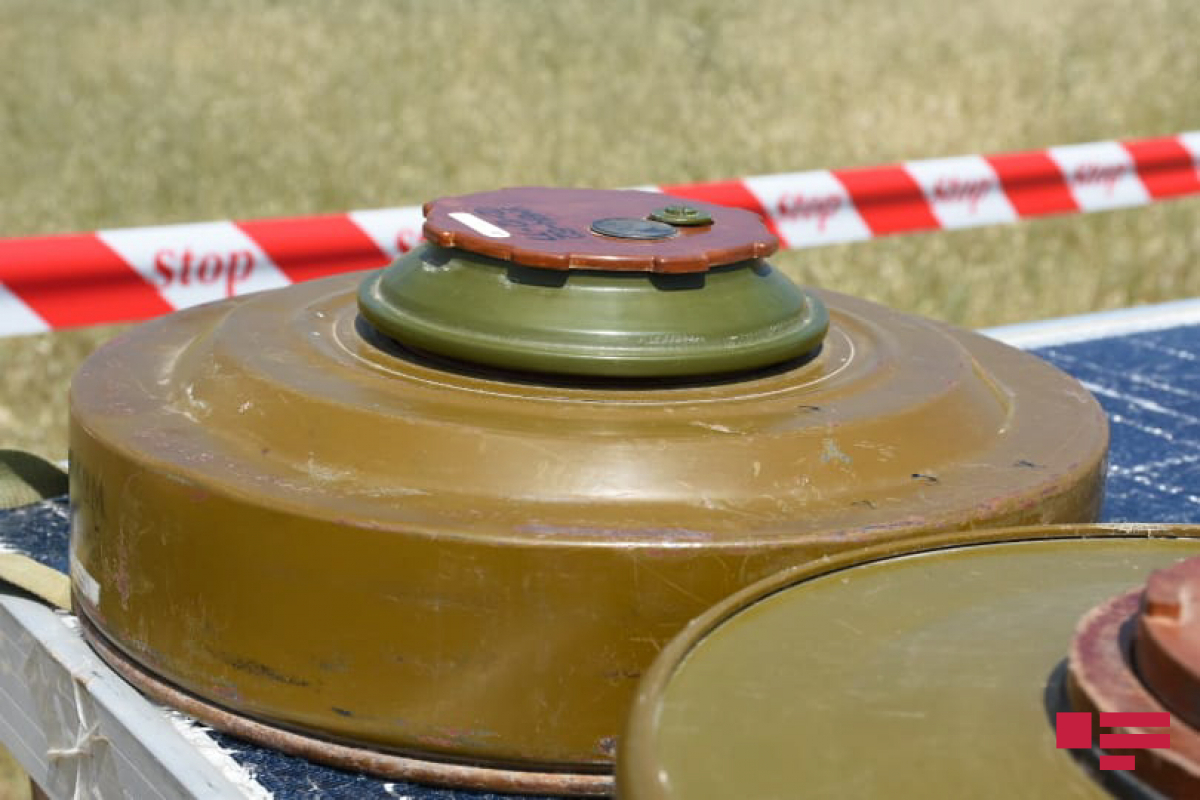
As a result of full-scale aggression, Ukraine has become the most heavily mine-contaminated country in the world. Of all friendly countries, only Azerbaijan has encountered the same problem, with the mining of Azerbaijani territories in Karabakh continuing with the connivance and assistance of the Russian military contingent. President of Azerbaijan Ilham Aliyev said in April that Azerbaijan is one of the most heavily mine-infested countries in the world. Kyiv can benefit from Baku’s experience in fighting this threat, including in the international arena and in the legal domain.
“Today Ukraine is one of the most heavily mined countries in the world: 30% of its territory remains potentially dangerous,” said Sergei Kruk, head of the State Service for Emergency Situations of Ukraine.
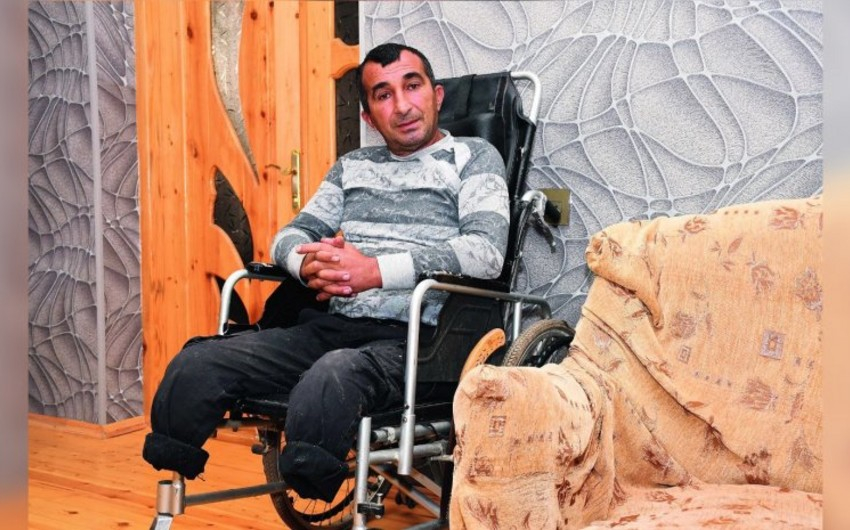
The international think tank GLOBSEC called Ukraine the “largest mined area in the world,” and the United Nations Development Programme agency stressed that Ukraine has become one of the world’s largest minefields, putting more than 14 million people at risk.
This commonality between Ukraine and Azerbaijan is not incidental. Both states oppose pro-Russian separatism: Ukraine in Donbass and Crimea, Azerbaijan in Karabakh. Ukraine is Europe’s bastion against the aggressive expansion of Moscow; Azerbaijan is one of the main suppliers of energy resources to the EU, compensating the refusal of Russian gas.
Given Azerbaijan’s regular humanitarian aid to Ukraine, Baku’s experience in the mine threat can be useful to Kyiv not only in terms of demining. For three years, the Azerbaijani authorities have been pushing the issue in international organizations, bringing it to the attention of the international community and defending the interests of mine-affected countries. In April this year, President Aliyev came out with an initiative to make humanitarian demining the 18th UN Sustainable Development Goal and proposed setting up a Like-Minded Group of Mine-Affected Countries.
Baku, which has appealed to the International Court of Justice to stop the killing and wounding of Azerbaijanis by explosive devices on ethnic and national grounds in 2021-2023, has gained valuable experience in legal counteraction in this context. This is all the more important given President Zelenskyy’s statement on mine terrorism as one of the charges against Russia.
Ukraine and Azerbaijan: similarities of the mine threat
- “It may take 30 years to completely clear the country of explosive hazards,” Defense Minister Reznikov said. “Azerbaijan needs nearly 30 years to solve issues related to demining,” said President Aliyev.
- “The World Bank estimates that demining will cost Ukraine $37.4 billion,” said Ukrainian Prime Minister Denis Shmygal. According to last year’s UNDP report, Azerbaijan will need about the same amount for the same needs.
- “124 people have been killed by mines in Ukraine since the start of the invasion,” Ruslan Beregulya, head of the Department of Environmental Security and Mine Action of the Ukrainian Ministry of Defense, said on April 22. According to Ilham Aliyev, nearly 300 citizens of Azerbaijan have been killed or seriously wounded as a result of Armenian mine terrorism.
- On April 27, a mine exploded in Kharkov Oblast, killing 1 and injuring 4 power engineers; the next day in Karabakh, an Azerbaijani aerial surveying team was blown up on a mine, resulting in the deaths of 3 of its members.
- On May 1, 2023, a civilian was blown up on an unknown explosive device in Izyum District of Kharkiv Oblast, sustaining serious injuries; on the same day, a villager was killed by a mine explosion in Jabrayil District of Karabakh.
“Traps” for Ukrainians and Azerbaijanis
 The November 2022 report of Landmine Monitor by the International Campaign to Ban Landmines revealed that retreating Russian forces had been planting booby traps and improvised explosive devices in Ukraine since February 2022 in many locations. The Russians left anti-personnel mines, including victim-activated booby traps, planting them on animals, on corpses, and on roads, in fields and forests.
In February of this year, the Azerbaijan National Agency for Mine Action (ANAMA) reported the discovery of a mined mass grave in Karabakh. Armenia anticipated that it would be discovered and mined the area to kill people looking for the remains of their relatives. “This method is typical of Armenian war crimes, even ordinary cemeteries in liberated territories are mined,” ANAMA officials explained.
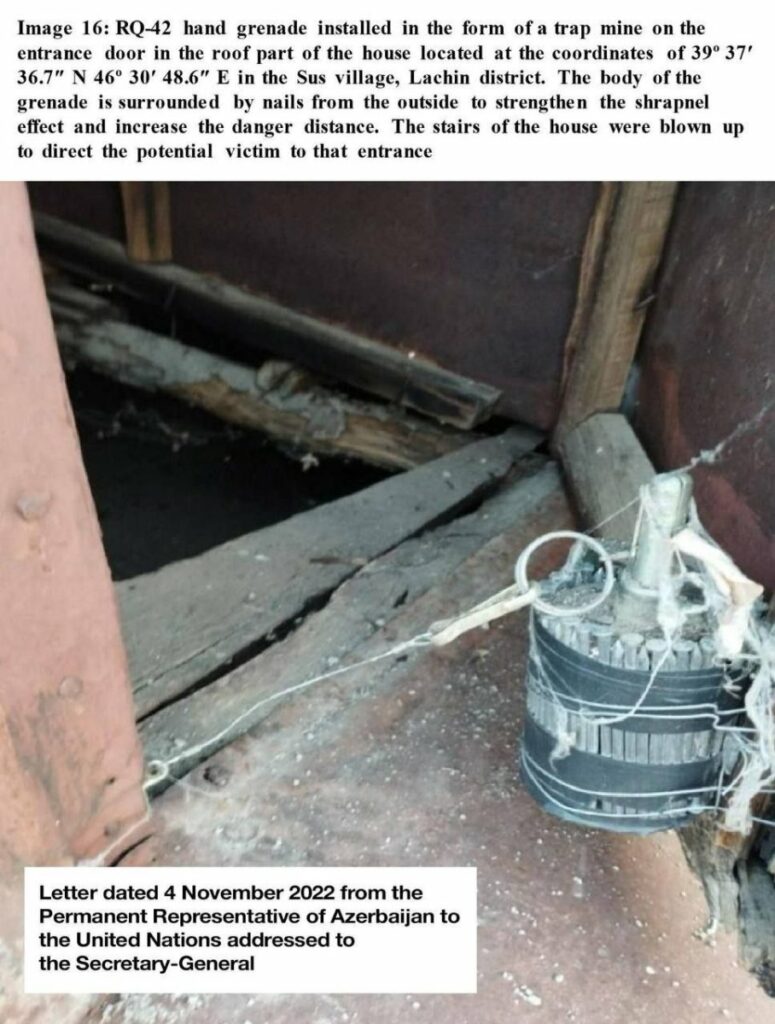
Last August and November a large number of booby traps were found in settlements in Lachin District of Azerbaijan, left by Armenian troops without a fight after 30 years of occupation. Before leaving, they planted booby traps under the floors of entryways, behind the doors and in the yards of residential buildings, just as the Russian aggressors did before fleeing from Bucha, Irpen and other towns of Kyiv Oblast.
Sowing death
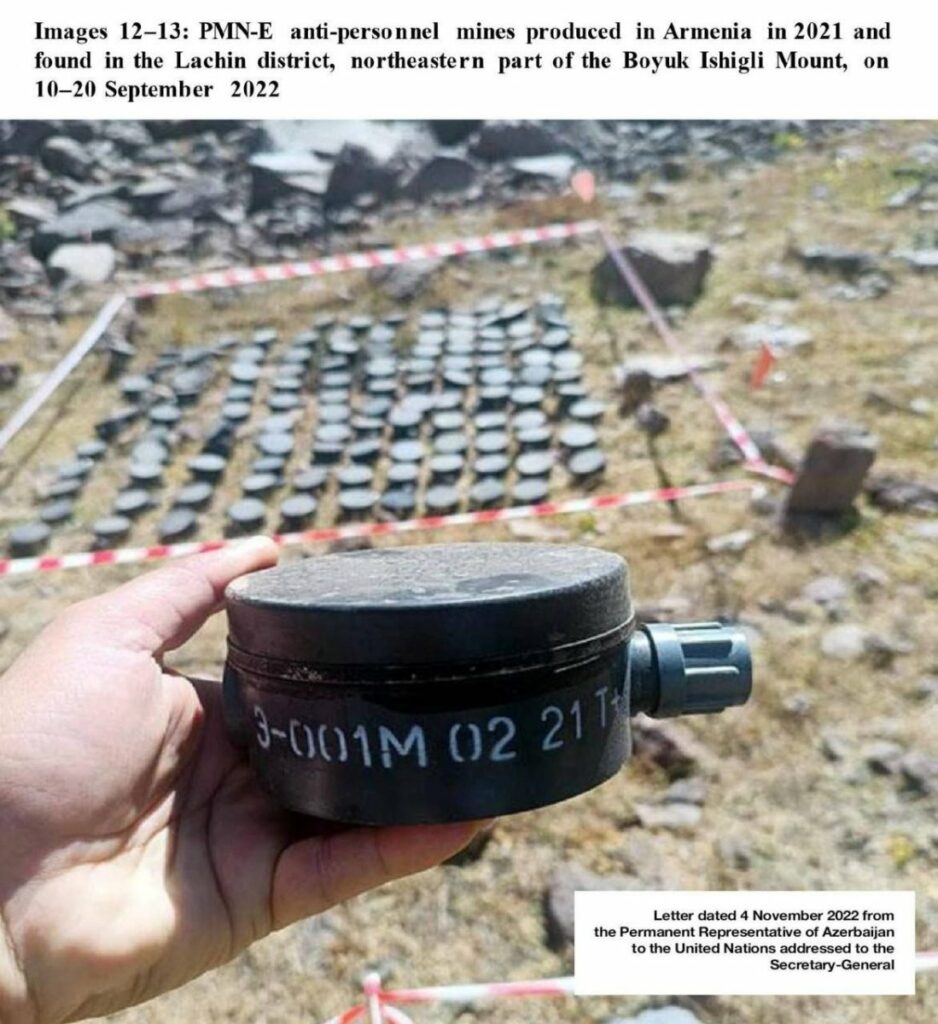
 The aggressor’s troops continue to sprinkle seeds of death into the occupied Ukrainian lands on a daily basis. In Karabakh, part of which remains under the control of the Russian military contingent, a similar situation persists. Although Azerbaijan was able to liberate most of its sovereign territory in the fall of 2020 as a result of the Second Karabakh War, the Armenian side continues to mine the land with the full connivance and assistance of the Russian military contingent. Nearly 3,000 mines were discovered in Lachin, Kalbajar and Shusha Districts of Karabakh in August and November of last year. Most of them were marked as manufactured in Armenia in 2021.
At the same time, as Azerbaijani Foreign Minister Jeyhun Bayramov pointed out, Armenia not only refuses to provide full and accurate information about the minefields, but also illegally delivers and plants new mines in Azerbaijan. He cited documented evidence that these mines had been manufactured in Armenia in 2021, that is, after official Yerevan had already signed the agreement committing to a full ceasefire and cessation of all hostilities in the area of the Karabakh conflict.
The purpose of the ongoing mining is to prevent the return of more than a million Azerbaijanis to the liberated territories, which they were forced to leave because of Armenian aggression.
Translated from Focus.ua
Related Posts

Previous Post
Next Post

- Aliyev says Turkic world is emerging as a major center of influence

- Baku hosts Turkic World Week honouring landmark 1926 Turkological Congress

- EU envoy holds talks in Baku ahead of high-level engagement with South Caucasus

- Europe must not lose Azerbaijan: Oleksiy Goncharenko on the risks of confrontation between Baku and the Council of Europe
- A leader forged by patience and victory