
Now Reading: Trump’s new era and Azerbaijan – strategy and expectations
-
01
Trump’s new era and Azerbaijan – strategy and expectations

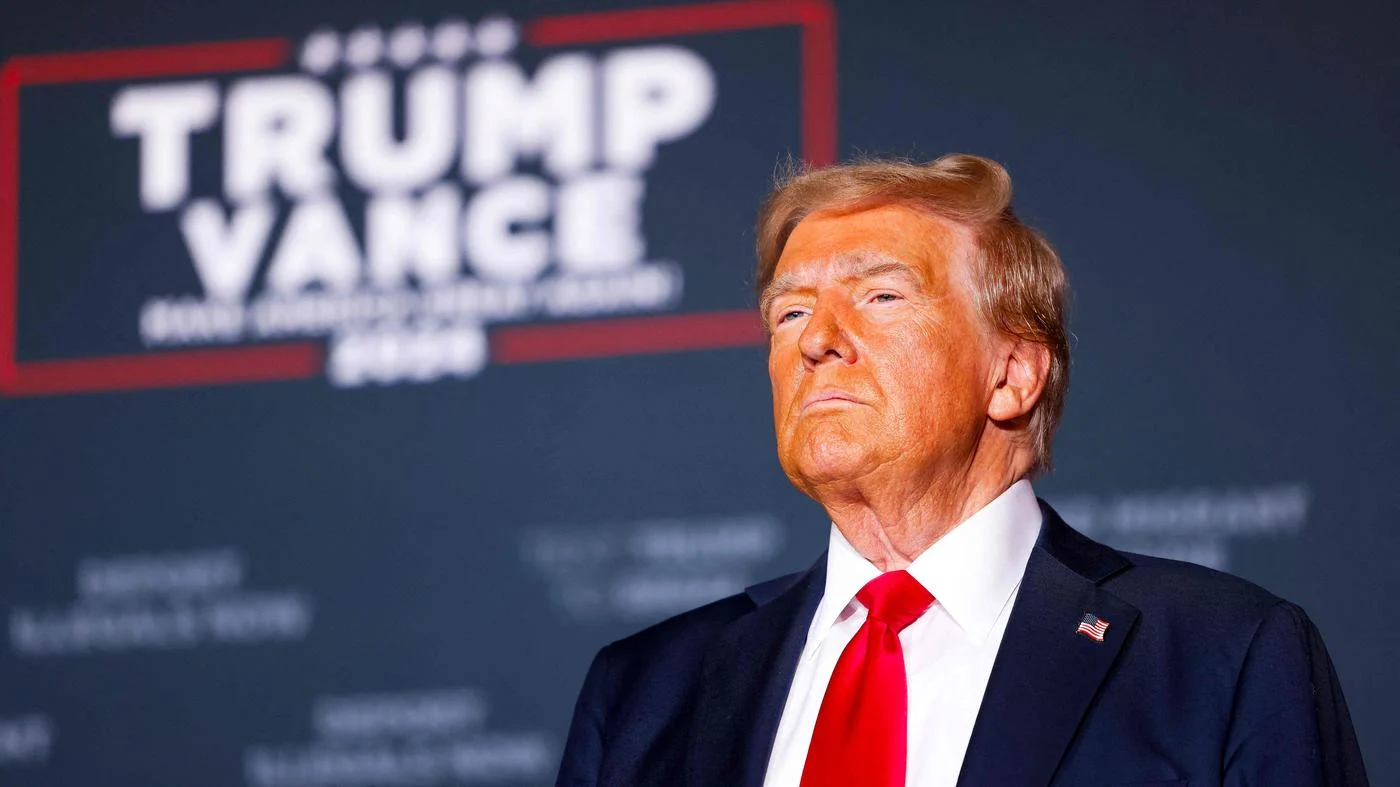
In his interview to the leading Azerbaijani media on January 7, President Aliyev touched upon the issue of relations with the upcoming Trump administration, notably speaking about his positive expectations, up to the prospects of establishing strategic partnership relations. This statement was rather unexpected, given many recent tensions between Baku and Washington, including the spat with the U.S. Embassy and the Azerbaijani side’s refusal to hold a US-mediated meeting of foreign ministers with Armenia during the OSCE Summit in Malta. Back then, Azerbaijani MFA issued a statement that Biden’s administration “had failed” in its attempts to make a positive contribution to the Armenian-Azerbaijani peace process.
However, this contrasting rhetoric shows that Baku has a different attitude to the future U.S. administration and doesn’t extend automatically the currently negative bilateral agenda into Trump’s presidential term. Indeed, the president-elect has already shown that his views of American interests and goals are quite different from his predecessor’s, but what exactly does Azerbaijan expect from his next four-year cadence and what will its strategy likely be?
In general, Donald Trump is believed to espouse a very pragmatic approach to foreign relations. Unlike most of his predecessors, he has never been eager to draw dividing lines in his foreign policy based on the partner countries’ democratic status and rarely misses an opportunity to pursue a dialogue. In 2018, Trump became the first ever US leader to meet with his North Korean counterpart. As a former businessman particularly proud of his negotiating acumen, he has a strong preference for bilateral talks, which is in line with Baku’s foreign policy style prioritizing bilateral or other small formats to large multilateral ones.
Trump’s “peace through strength” idea, as well as his inclination to reduce US foreign policy costs, means that he prefers to establish working partnerships with actors capable of exerting stabilizing influence in their regions and respective of American red lines. For Azerbaijan, the country that has established itself as the regional leader and recently started to claim the status of a middle power, this creates opportunities for establishing a mutually beneficial partnership while keeping Washington at an arm’s length. Baku’s insistence on “keeping foreign powers away” from the regional politics should better fit Trump’s selective-engagement, low-cost approach than a rather interventionist stance associated with Democratic administrations.
What explains this?
- Trump is believed to be pragmatic, he is friendly with many illiberal leaders, and even though he had tensions with Turkey, it’s relatively easier to come to terms with him. Democrats usually have strong boundaries between friends and others and specific admission criteria. He is believed to be in favour of working with functioning states that can have effective influence in their region and thus be helpful, even if not necessarily being US allies. This aligns with Baku’s approach of keeping no extra-regional forces at bay. Armenia is traditionally closer to democrats, the strategic partnership agreement being the latest example.
- Ideological affinity (traditional values, against left-liberalism, Soros etc.), Azerbaijan has been building networks with conservative Evangelists etc.
- The Iranian factor. Iran has already started to behave a lot more carefully since Trump’s election. President Pezeshkian even made a statement that Iran isn’t going to kill Trump. The former Trump administration also adopted the 2019-2025 U.S. National Security Strategy for Central Asia, a whole-of-government strategy that has resulted in the region becoming a regular component of U.S. policy, no longer an afterthought. This is important for Azerbaijan now.
- Another risk is that Trump will pursue the new “division of the world” leaving the South Caucasus to Russians. We have to actively prevent it by activating our alliances and offer something worthy. There are also risks stemming from the growing role of India for US, and populist-Christian strides in the Trumpist camp which often cite Armenia as another example of a “white Christian nation under threat”.
- Economically, Azerbaijan wouldn’t mind more investment, the President was talking about it and even admitted that we can raise foreign debt. So, US can be one of the sources. Azerbaijan may feel frustrated with the BRICS’ refusal to accept it, despite hopes that it may happen without having to change traditional multi-vector policy. The explosive growth of the Middle Corridor is a game-changer since Trump was last in office, making transit of goods from this region more reliable, cost-efficient, and accessible to global markets.
- In general, the coming years will be “the era of political opportunities” because many things are changing, new alignments and configurations will emerge and we can improve our stance in DC. International norms may undergo significant change and we would like to shape the regional order in our favour – to have Armenia recognize Azerbaijani territorial integrity, interests etc. It requires a pro-active behaviour.
Murad Muradov is the co-founder and deputy director of the Topchubashov Center in Baku, Azerbaijan.

Related Posts
Previous Post
Next Post
- Aliyev says Turkic world is emerging as a major center of influence

- Baku hosts Turkic World Week honouring landmark 1926 Turkological Congress

- EU envoy holds talks in Baku ahead of high-level engagement with South Caucasus

- Europe must not lose Azerbaijan: Oleksiy Goncharenko on the risks of confrontation between Baku and the Council of Europe

- A leader forged by patience and victory