
Now Reading: Breakthrough for Baku and Tbilisi
-
01
Breakthrough for Baku and Tbilisi

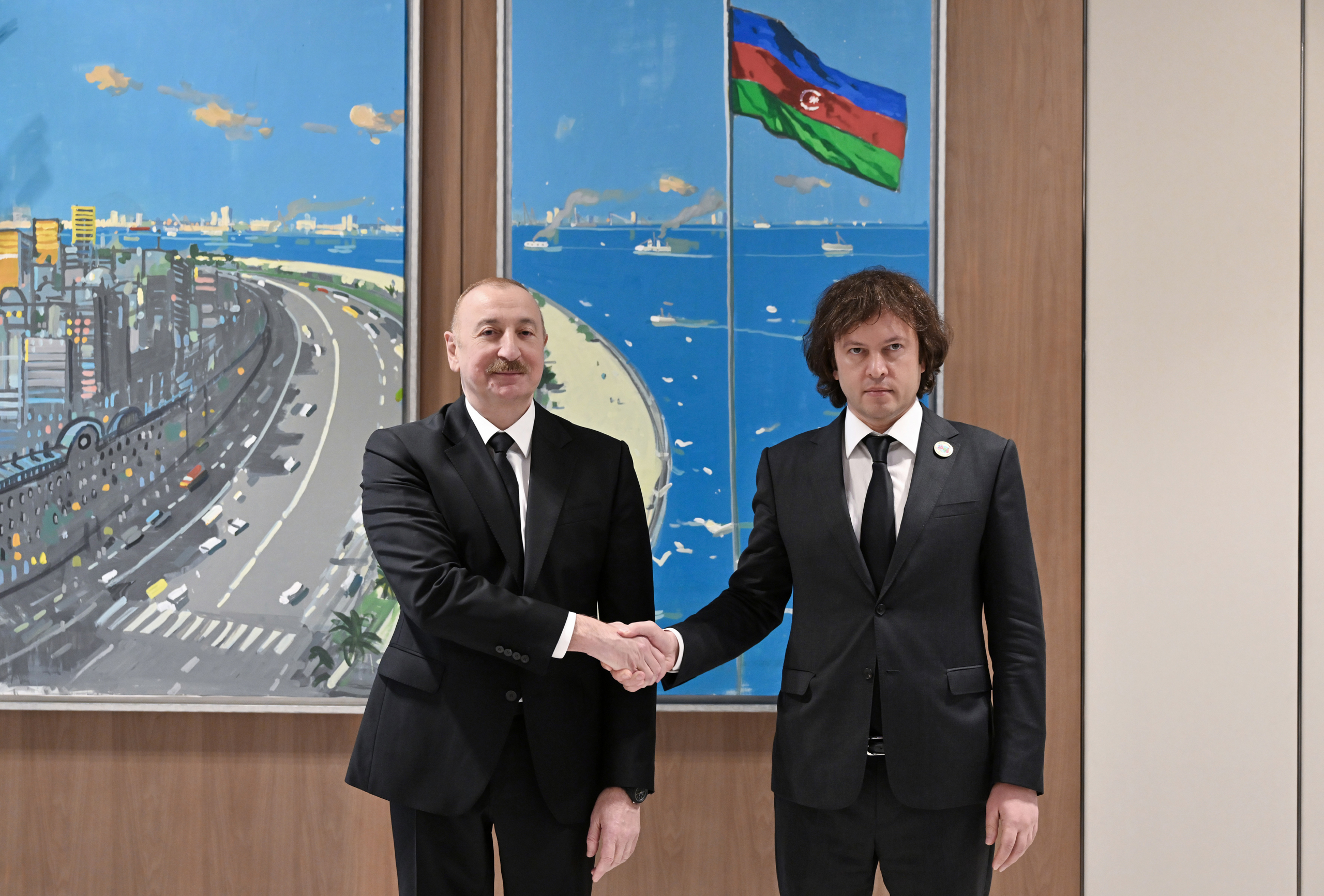
During his official visit to Georgia in early April this year, Azerbaijani President Ilham Aliyev stated that Tbilisi and Baku support each other’s territorial integrity, sovereignty and inviolability of borders in all international organizations.
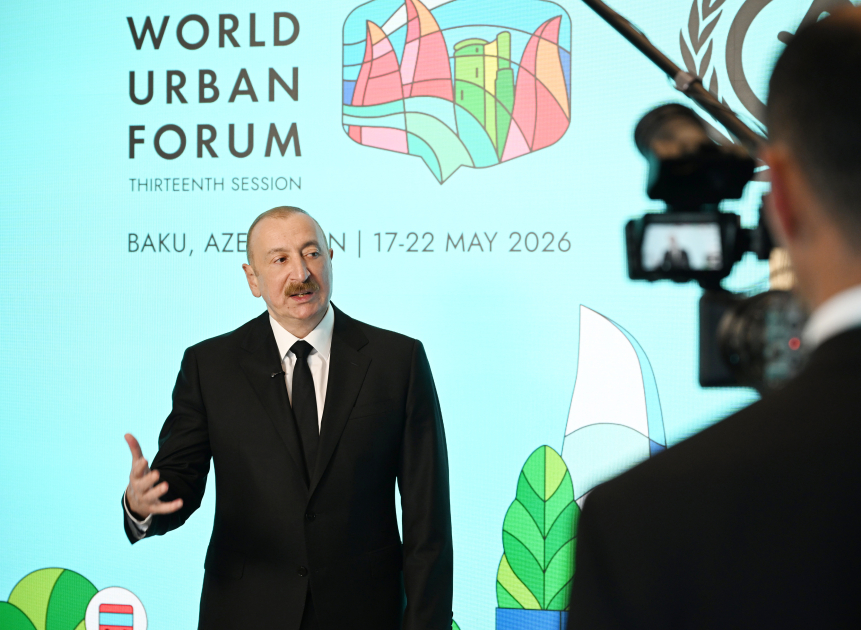
“This has been the case since time immemorial, and it will remain so in the future,” Aliyev said at the time, stressing that the two sides had also achieved significant success in the economic sphere. According to him, the business environment allows the two countries to further expand these achievements. Less than a month and a half later, Georgian Prime Minister Irakli Kobakhidze, who took part in the 13th session of the UN World Urban Forum in Baku, met with President Aliyev, and the two sides further expanded their already intensive business agenda.
In particular, agreements were signed between the governments of the two countries on the supply of natural gas and electricity to Georgia and their transit through Georgian territory, as well as the protocol of the 41st meeting of the Coordination Council on the rehabilitation, reconstruction and construction of the railway section from Marabda to the Turkish border at Kartsakhi, as part of the Baku-Tbilisi-Kars railway project.
As for gas supplies, Azerbaijan is Georgia’s main gas importer, accounting for more than 90% of its market. Previously, this market was fully covered by Russia. But after the launch of the Baku-Tbilisi-Erzurum gas pipeline and the August 2008 war, Georgia reoriented itself toward Azerbaijani gas. Last year, 2.342 billion cubic meters of gas were exported from Azerbaijan to Georgia.
Moreover, the above-mentioned business environment — and, one may add, the consistently favorable political background between the two countries — has contributed to SOCAR’s investments in Georgia reaching $2.1 billion. This is not to mention the fact that the company is not only the main supplier of natural gas to the neighboring republic, but also of oil and petroleum products. Azerbaijan’s state oil company, which has owned a network of filling stations in Georgia for many years, has acquired the country’s domestic gas transportation systems. SOCAR subsidiaries are engaged in expanding and modernizing gas distribution systems, and also own an oil terminal in the Georgian Black Sea port of Kulevi, through which Azerbaijani oil and petroleum products are transshipped to global markets.
As for oil, according to Kobakhidze, the parties signed an agreement on the Baku-Supsa pipeline in Georgia, whose oil transshipment operations have been seriously stalled over the past three years. They agreed that its launch — or relaunch — would be ensured. The pipeline remains the property of Georgia, and both sides will receive proportional revenue.
The capacity of the Baku-Supsa oil pipeline exceeds 7 million tons per year. According to open sources, Kazakhstan is also interested in its full operation for the supply of its oil to Europe.
Incidentally, today there are 1,660 companies with Azerbaijani capital operating in Georgia. Azerbaijan’s total investments in the Georgian economy reached around $3.6 billion by the end of last year.
Transport and logistics, as well as increased cargo turnover along the Middle Corridor, which is showing strong growth, appear to be a separate and special “package” of Georgian-Azerbaijani cooperation. In the first quarter of this year, Georgian ports handled more than 4.3 million tons of cargo, a 15% increase compared with the same period last year. The container segment also strengthened: 188,000 TEU were handled in the first quarter, 6% more than in the same period of 2025.
A separate symbol of the new stage of Georgian-Azerbaijani rapprochement was the decision to resume passenger rail service between Baku and Tbilisi after a six-year break. Daily services will start on May 26. The decision was made during Prime Minister Irakli Kobakhidze’s visit to Baku.
Much has been said about the importance of the Middle Corridor, which runs from the Chinese-Kazakh border through Kazakhstan, the Caspian Sea, Azerbaijan and Georgia to Türkiye and further on to Europe, as well as about the need to expand it, develop infrastructure, and build high-quality and extensive storage facilities. In essence, this is a matter of strategic importance for the partnership between Baku and Tbilisi, and the new documents signed in the Azerbaijani capital are aimed at strengthening the link between the two states for their own benefit and for the benefit of interested parties. In other words, both countries serve as “gateways”: Azerbaijan’s gateway to Europe, and Georgia’s gateway to Asia.
As we can see, Georgia and Azerbaijan need each other in many respects, including in the context of implementing the project to lay a high-voltage electricity cable from Azerbaijan through Georgian territory and the Black Sea to Romania.
Therefore, Georgian-Azerbaijani projects go far beyond the region and have strategic significance, including the Baku-Tbilisi-Kars railway, the Baku-Tbilisi-Ceyhan oil pipeline, and the Southern Gas Corridor.
Most importantly, if not for the history of relations between Azerbaijan and Georgia — a history not overshadowed by conflicts or ethnic and other claims — no calculation could have brought the cooperation between the two countries to the level of a true strategic partnership, rather than one existing only on paper. Azerbaijanis have long lived peacefully in Georgia, both compactly and dispersed among all nations and ethnic groups; today they make up about 7% of the country’s total population.
The potential of this partnership is great. Baku and Tbilisi consistently support each other and serve as the best examples of good neighborliness, friendship and partnership.
Irina Dzhorbenadze
Related Posts
Previous Post
Next Post
- Aliyev says Turkic world is emerging as a major center of influence
- Baku hosts Turkic World Week honouring landmark 1926 Turkological Congress

- EU envoy holds talks in Baku ahead of high-level engagement with South Caucasus
- Europe must not lose Azerbaijan: Oleksiy Goncharenko on the risks of confrontation between Baku and the Council of Europe
- A leader forged by patience and victory