
Now Reading: Who is behind the revanchists’ threats against Azerbaijan?
-
01
Who is behind the revanchists’ threats against Azerbaijan?

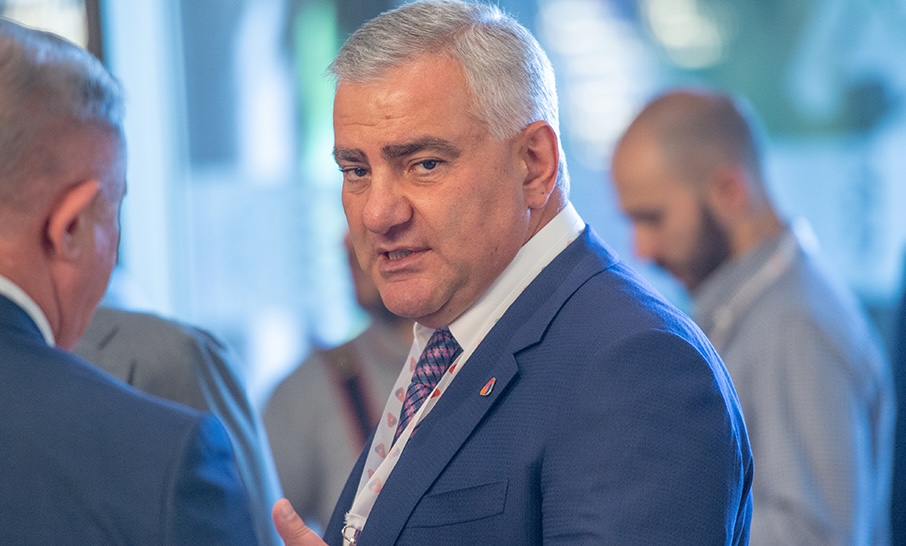
It seems that during Armenia’s election campaign, the main candidates for prime minister have simply forgotten about Armenia. Azerbaijan has been and remains the central topic of pre-election discussions and debates. Over the past weekend, Russian oligarch and leader of the pro-Kremlin Strong Armenia party, Samvel Karapetyan, distinguished himself in this regard.
He declared that, if he comes to power, he will pass a “law banning Azerbaijanis from buying real estate” in Armenia. “If we cannot prevent this, all our economic projects will become impossible to implement, because jobs will go to Azerbaijanis. Therefore, at the very first meeting of our government, we will pass a most important law — we have called it the ‘Safarov prevention law’,” Karapetyan said. In addition, the Russian oligarch of Armenian origin promised that he would “use his connections to increase Azerbaijan’s problems.”
Samvel Karapetyan’s nationalist convictions, as well as the constant attempts by politicians from the revanchist camp to frighten potential voters with claims that ethnic Azerbaijanis are supposedly about to flood into Armenia and that schools are allegedly already being built for them, are hardly a secret. But now Karapetyan is taking the next step and openly promising “problems” for Azerbaijan.
The point is not even that Mr. Karapetyan still has to win the election and become prime minister — something that is, to put it mildly, far from guaranteed. The question is different: what kind of problems can Samvel Karapetyan actually create, even if he becomes head of the Armenian government?
Perhaps, of course, the revanchists are imagining some kind of “dream scenario”: the Armenian army, no longer led by “traitor Nikol” but by “patriot Samvel,” launches an offensive the morning after his election, retakes the territories previously liberated from Armenian occupation, crosses the former line of contact, captures Ganja, Gabala and, if lucky, even Baku. But in reality, the balance of power does not favour such a scenario. To put it mildly.
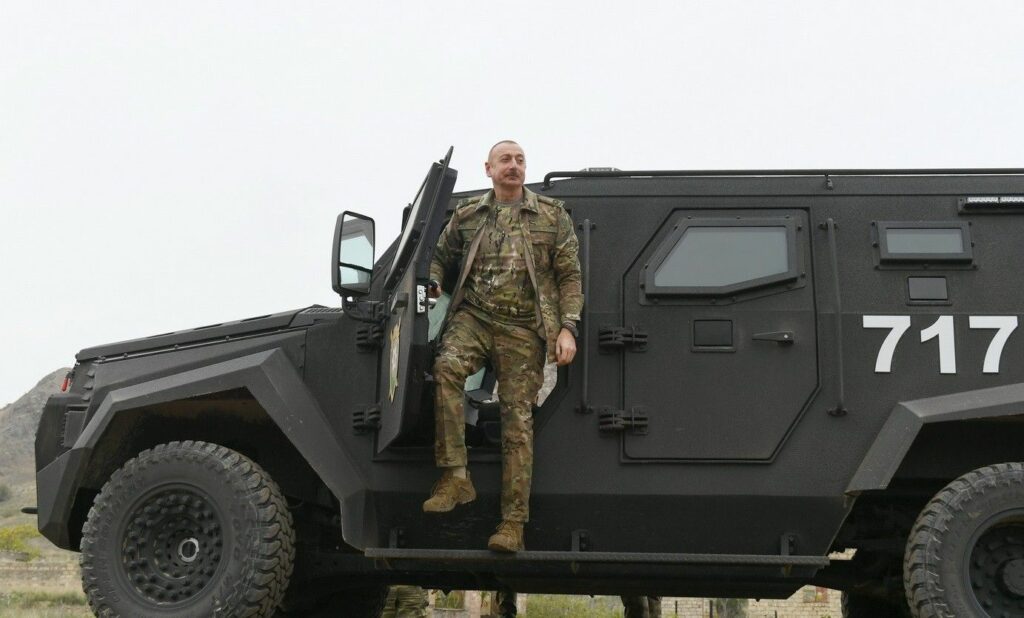
This is no longer the 1990s but the 2020s. The Azerbaijani army first achieved a brilliant victory in the 44-day Patriotic War, then carried out anti-terrorist operations in the autumn of 2023, and today, according to experts, it is stronger than it was in both 2020 and 2023. So it would be better not to dream of large-scale offensive operations.
Moreover, accountability has not disappeared either. It is one thing to launch aggression in the early 1990s. It is quite another to do so now, when Azerbaijan’s political weight and international authority have grown many times over. In the 1990s, four UN Security Council resolutions on Karabakh could remain on paper for so long. Today, Azerbaijan has already shown that it can implement such international decisions on its own. Most likely, Karapetyan himself understands this. Unlike Pashinyan in 2021, he is not directly promising to “retake cities.” Another matter is that Armenia is quite capable of staging minor provocations on the border — both in agreed sections and in areas where the border is still only provisional.
Strictly speaking, Armenia also has experience with border provocations. And that experience has been far from happy. One may recall how attempts to “flex muscles” near Lake Garagol and the Boyuk Ishigli volcano ended. The problem is that such provocative activity would undoubtedly set the peace process back. It may even return the region to a conflict dimension.
And here another question must be raised: was this statement merely a product of election rhetoric? Or is Karapetyan carrying out the orders of external players, including certain circles in Russia — especially those who continue to attack Pashinyan over the Prague agreements, where Armenia recognised Karabakh as part of Azerbaijan?
In any case, Armenia should know very well what war based on calculations of foreign support means. And when politicians such as Samvel Karapetyan promise to “create problems for Azerbaijan,” they should understand that Azerbaijan will respond to such a policy. What kind of problems this may create for Armenia itself is something they would be wise to calculate in advance.
Related Posts
Previous Post
Next Post
- Aliyev says Turkic world is emerging as a major center of influence

- Baku hosts Turkic World Week honouring landmark 1926 Turkological Congress

- EU envoy holds talks in Baku ahead of high-level engagement with South Caucasus

- Europe must not lose Azerbaijan: Oleksiy Goncharenko on the risks of confrontation between Baku and the Council of Europe
- A leader forged by patience and victory