
Now Reading: Democratic standards should not depend on geopolitics
-
01
Democratic standards should not depend on geopolitics

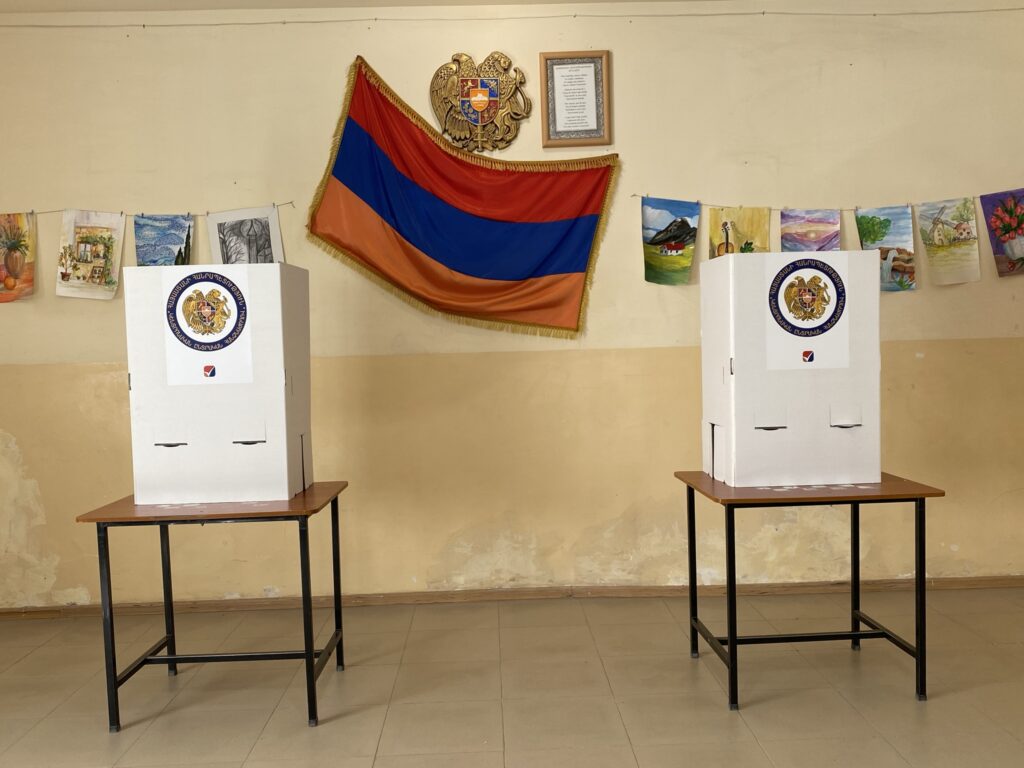
The recent parliamentary elections in Armenia have once again raised an important question: are democratic principles and electoral standards applied consistently, or are they too often influenced by geopolitical considerations? If democracy and the rule of law are to retain their credibility, they must be evaluated according to universal criteria rather than political convenience.
Following the elections, various allegations emerged in the public domain concerning possible irregularities, administrative pressure on opposition forces, and the alleged use of state resources during the campaign. Whether these claims are ultimately substantiated is a matter for independent examination. However, they should neither be dismissed out of hand nor ignored simply because of the political context in which they arise.
What has drawn particular attention is the relatively muted response from many Western political actors and institutions. In other cases, allegations of comparable electoral shortcomings have prompted strong criticism, extensive international scrutiny, and even discussions of sanctions or diplomatic consequences. Such differences in approach inevitably give rise to questions about consistency.
This is not an argument for rejecting the election results or accepting every accusation as fact. On the contrary, democratic systems depend on evidence-based assessments and due process. But if international organizations and democratic institutions genuinely seek to uphold electoral integrity, they should apply the same level of scrutiny to all countries, regardless of their geopolitical orientation or strategic partnerships.
Claims regarding possible external political, advisory, or institutional influence on electoral processes also deserve careful and objective evaluation. Transparency requires that such issues be examined openly and professionally rather than overlooked because they may be politically inconvenient.
The South Caucasus remains a region where confidence in democratic institutions is closely linked to long-term stability, peace, and regional cooperation. For that reason, international assessments of elections should be balanced, impartial, and grounded in consistent principles rather than selective interpretation.
Ultimately, the strength of democracy lies in the equal application of its standards. It is difficult to defend universal values while applying different criteria to different countries. Credibility can only be maintained when the same expectations of transparency, fairness, and accountability are upheld everywhere.
International organizations, election observers, and political institutions should therefore demonstrate consistency not only in their declarations but also in their actions. A principled and even-handed approach is essential for strengthening trust in democratic processes and preserving the legitimacy of efforts to promote free and fair elections worldwide.
Related Posts
Previous Post
Next Post
- Aliyev says Turkic world is emerging as a major center of influence

- Baku hosts Turkic World Week honouring landmark 1926 Turkological Congress

- EU envoy holds talks in Baku ahead of high-level engagement with South Caucasus

- Europe must not lose Azerbaijan: Oleksiy Goncharenko on the risks of confrontation between Baku and the Council of Europe

- A leader forged by patience and victory