
Now Reading: The last route standing: Why Washington must invest in the Middle Corridor
-
01
The last route standing: Why Washington must invest in the Middle Corridor

Nine weeks into the war with Iran, a fragile ceasefire is technically in effect, but the Strait of Hormuz remains under a dual blockade, and a deal remains elusive. Whether a negotiated settlement emerges or hostilities resume, the war has already revealed a structural vulnerability: every major trade route between Asia and Europe has been disrupted or foreclosed except one — the Trans-Caspian International Transport Route (TITR), or Middle Corridor.
Russia’s Northern Corridor — the overland route through Russian territory — remains closed to Western shippers under sanctions imposed after Moscow’s 2022 invasion of Ukraine. Iran’s southern ports at Chabahar and Bandar Abbas, which offered a pathway to the Indian Ocean, have been bombed. The Red Sea has been threatened by Houthi attacks since 2023, with both tonnage and number of ships passing falling by half from 2022 to 2025.
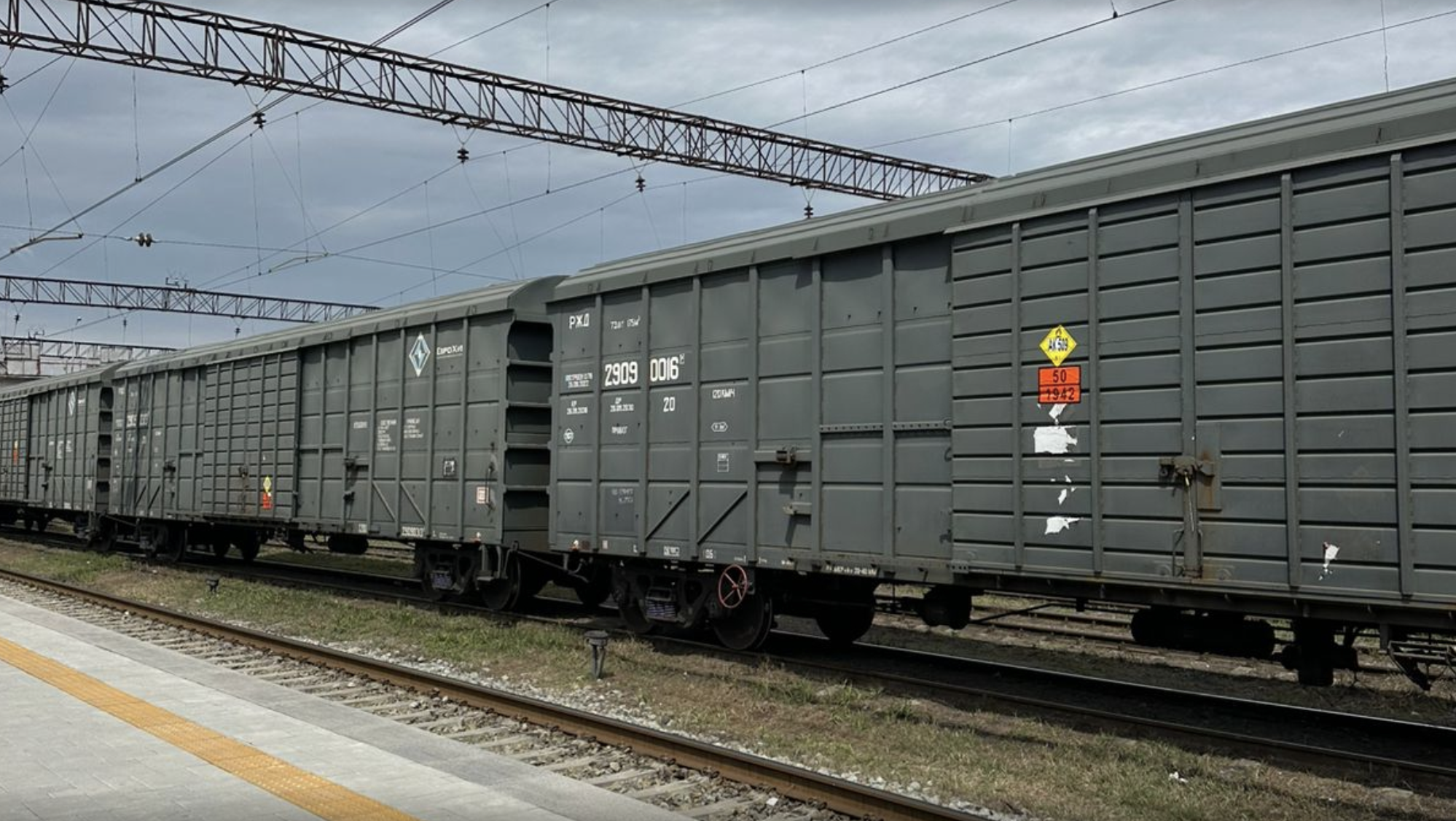
Meanwhile, the Middle Corridor — the multimodal route connecting Central Asia and China to Europe via the Caspian Sea, the South Caucasus, and Turkey — has continued to absorb transit freight.
In an era of cascading disruption, it has emerged as the most stable and secure pathway between East and West. Washington has recognized the corridor’s value and made a genuine diplomatic investment in the region. Now it needs to match that diplomacy with legislation and capital.
The conflict with Iran goes beyond the Middle East
Russia’s 2022 full-scale invasion of Ukraine was the first shock that spurred countries to develop the Middle Corridor. Cargo volume on the route grew from roughly 800,000 tons in 2019 to 4.5 million tons by 2025 as shippers sought alternatives to the sanctioned northern route. The Iran war has foreclosed what remained of the southern option, elevating the Middle Corridor from alternative to default.
The two states anchoring it — Kazakhstan and Azerbaijan — are seeing economic gains. Kazakhstan, producing 1.7 million barrels of crude per day, has watched oil prices rise more than 40% since the war began. Azerbaijan, which supplied 46.4% of Israel’s oil through the Baku-Tbilisi-Ceyhan (BTC) pipeline in 2025, is benefiting from elevated prices and surging strategic relevance. Together, these countries supply roughly 70% of Israel’s crude imports.
On March 5, Iranian drones struck Azerbaijan’s Nakhchivan International Airport, six miles from the Iranian border — the precise territory where the Trump Route for International Peace and Prosperity (TRIPP) is to be built under a 99-year U.S.-managed lease. On March 18, the Israeli air force struck Iranian naval vessels and port infrastructure at Bandar Anzali on the Caspian Sea — the first strike ever in those waters — targeting the Iran-Russia military supply route. The corridor has kept operating, but the geography of the conflict is closing in around it.
A 21st-century corridor with 1990s legislation
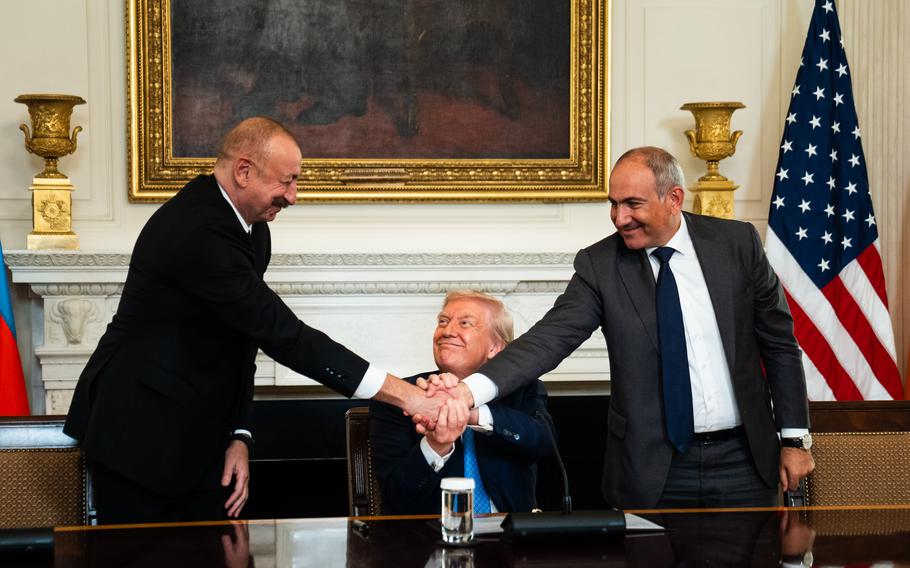
Over the past year, the Trump administration has made significant diplomatic investments in the South Caucasus and Central Asia. President Donald Trump presided over the peace pledge between Armenia and Azerbaijan and hosted all five Central Asian heads of state at the White House in a C5+1 summit last November.
Kazakhstan, Uzbekistan and Azerbaijan joined the Board of Peace, Uzbek and Kazakh leaders were invited to the G20 in Miami, and Kazakhstan joined the Abraham Accords. Importantly, the TRIPP corridor — a 27-mile rail and road route through Armenia’s Syunik province connecting Azerbaijan’s mainland to its Nakhchivan exclave and onward through Turkey to European markets — is set to anchor the western end of the Trans-Caspian system.
The legislative tool kit hasn’t kept pace. Section 907 of the 1992 Freedom Support Act still constrains U.S. military assistance to Azerbaijan without an annual presidential waiver — a law drafted during the first Karabakh war, which has since ended under U.S.-brokered peace. The Jackson-Vanik Amendment, enacted in 1974 to pressure the Soviet Union over Jewish emigration, still denies Kazakhstan and Uzbekistan Permanent Normal Trade Relations (PNTR) status, despite both countries having complied with emigration standards for decades.
With time and across successive administrations, U.S. policy deprioritized the Caspian Guard Initiative — a Defense Department program launched in 2003 to strengthen maritime security cooperation with Azerbaijan and Kazakhstan and help them balance against Russia and Iran as littoral states. Washington is asking these governments to align with a Western-led framework, while its own laws treat them as Cold War adversaries. If adverse legislation isn’t lifted, it may well set back the recent diplomatic advances.
The narrow window
The Middle Corridor’s largest cargo category by volume is Central Asian energy and raw materials heading west — oil, minerals, agricultural exports — not Chinese goods headed to Europe. This is a sovereign export channel for a region that holds resources the world urgently needs. The corridor’s momentum is real, but the window is narrow.
The war with Iran has further validated the Middle Corridor. The governments along the corridor are stable; infrastructure investment is modernizing and accelerating; and the political leaderships are actively courting Western partners looking for the kind of engagement Washington has offered in diplomacy but not in legislation or capital,” wrote Akbota Karibayeva Meyer.
Akbota Karibayeva Meyer, is a Research Fellow at the Caspian Policy Center and a geopolitical risk analyst specialising in energy security, governance and political economy in Central Asia.

Related Posts

Previous Post
Next Post
- Aliyev says Turkic world is emerging as a major center of influence

- Baku hosts Turkic World Week honouring landmark 1926 Turkological Congress

- EU envoy holds talks in Baku ahead of high-level engagement with South Caucasus
- Europe must not lose Azerbaijan: Oleksiy Goncharenko on the risks of confrontation between Baku and the Council of Europe

- A leader forged by patience and victory