
Now Reading: WUF13: the crisis of modern urbanization and Azerbaijan’s experience
-
01
WUF13: the crisis of modern urbanization and Azerbaijan’s experience

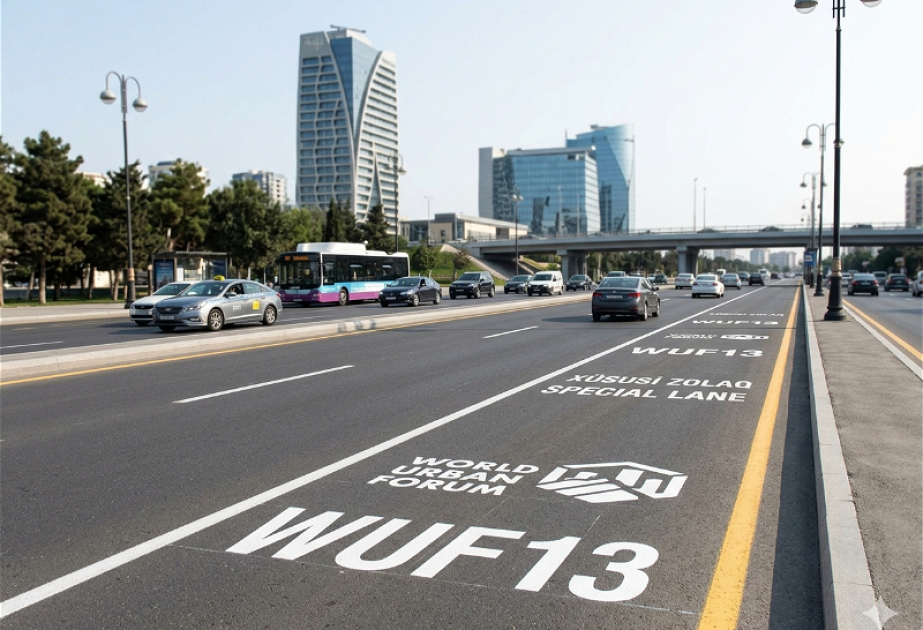
For almost an entire week, leading urban development specialists gathered in Baku to discuss the prospects for modern cities, sustainable infrastructure and global urban policy. Summing up the event, it should be noted that WUF13 in Baku became the largest forum in the history of the World Urban Forum, bringing together around 58,000 participants from 176 countries.
At the initiative of the host country, the forum also attracted 27 heads of state and government, further underscoring both the growing international significance of the platform and Azerbaijan’s ambition to scale up its own experience in modernizing urban infrastructure, as well as in restoring housing stock and settlements destroyed as a result of urbicide in Karabakh and East Zangezur.
Central to this context was the adoption of the “Baku Call to Action,” whose provisions reflect the emergence of a new international agenda in the field of post-conflict reconstruction, particularly in terms of developing a coordinated approach to the return of internally displaced persons, the restoration of social and housing infrastructure, and the comprehensive reconstruction of affected territories.
The document pays particular attention to the scale of the problem. It emphasizes that modern conflicts are increasingly accompanied by the destruction of the urban environment itself — residential neighborhoods, utility networks, transport infrastructure, healthcare and educational facilities, and life-support systems. As a result, the restoration of affected territories becomes an extremely capital-intensive, technologically complex and long-term process requiring not only substantial financial resources, but also sustained coordination among states, international organizations and specialized development institutions.
Against this background, the document advances the idea of developing more universal approaches to the reconstruction of affected territories, including standards for sustainable construction, digital governance, environmental adaptation and the integration of new technologies into the restoration of the urban environment.
At the same time, the global urban summit was also devoted to the growing global housing crisis, which is increasingly viewed by international organizations as one of the key threats to the stability of modern states and cities. This is no longer merely about housing shortages in poor countries, but about a systemic crisis of housing affordability across almost all regions of the world — from Africa and Latin America to Europe, North America and Asia.
A recurring idea throughout many of the forum’s discussions was that modern global urbanization is developing faster than states are able to create infrastructure, jobs, transport systems and affordable housing. According to UN agencies, billions of people today either live in conditions of housing instability or lack access to quality and safe housing. The problem is particularly acute in the rapidly growing megacities of developing countries, where population growth is accompanied by the expansion of informal settlements and slums, overloaded utilities and rising social tension.
At the same time, WUF13 repeatedly emphasized that the housing crisis can no longer be considered separately from broader global processes — climate change, migration, wars, energy instability and the crisis of global logistics. In effect, the UN and forum participants sought to convey the idea that cities are becoming the main zones where all modern crises converge simultaneously. It is cities that absorb the main migration flows, face the consequences of climate disasters, experience shortages of water and energy, and bear the main burden amid rising social inequality.
Another important theme of the forum was the climate resilience of cities. Participants repeatedly stressed that the current model of urbanization makes cities highly vulnerable to extreme heat, floods, water shortages and energy crises. For this reason, questions of new housing construction are increasingly linked to energy efficiency, green technologies, sustainable transport systems and digital management of urban infrastructure.
At the same time, WUF13 also revealed the growing contradiction between global sustainable development goals and the actual financial capacities of states. Many participants openly pointed out that developing countries simply do not have the resources for large-scale modernization of the urban environment. As a result, the need to attract international financial institutions, private capital and new mechanisms of public-private partnership to address housing problems is being raised with increasing urgency.
In this regard, Azerbaijan’s experience was viewed by many forum participants as one of the few modern examples of how a state is attempting to simultaneously address post-conflict reconstruction, large-scale housing construction, infrastructure modernization and the introduction of smart city elements practically from scratch.
Of course, urban challenges have not bypassed Baku itself. Climate change, growing pressure on infrastructure, chaotic construction practices of previous years, high population density in certain districts, a shortage of public spaces and the long absence of unified and strict urban planning standards have led to a whole range of systemic problems — from traffic congestion and environmental pressure to an imbalance between residential development and social infrastructure.
Against this background, the adoption of the Baku General Development Plan until 2040 became a conceptual attempt to build a more long-term and systematic model for the capital’s development. The document envisages easing the pressure on central districts, developing suburban areas, modernizing the transport network, expanding green zones, strengthening the resilience of urban infrastructure to climate risks, and gradually transitioning to more modern principles of urban planning and digital management of the urban environment.
In effect, this marks a shift away from the much less orderly approach to urban expansion that characterized previous decades toward a more centralized and strategic model of metropolitan development, in which housing, transport, ecology, energy and the quality of the urban environment are considered comprehensively, taking current processes into account.
In this sense, WUF13 became for Azerbaijan not only an opportunity to demonstrate its own experience in modernizing the urban environment and post-conflict reconstruction, but also a platform for the country’s more active inclusion in the global discussion on the future of cities, infrastructure and sustainable development.
Ilgar Velizade
Related Posts

Previous Post
Next Post
- Aliyev says Turkic world is emerging as a major center of influence

- Baku hosts Turkic World Week honouring landmark 1926 Turkological Congress

- EU envoy holds talks in Baku ahead of high-level engagement with South Caucasus

- Europe must not lose Azerbaijan: Oleksiy Goncharenko on the risks of confrontation between Baku and the Council of Europe
- A leader forged by patience and victory