
Now Reading: Questions mount over ANCA’s political line against peace in the South Caucasus
-
01
Questions mount over ANCA’s political line against peace in the South Caucasus
Questions mount over ANCA’s political line against peace in the South Caucasus

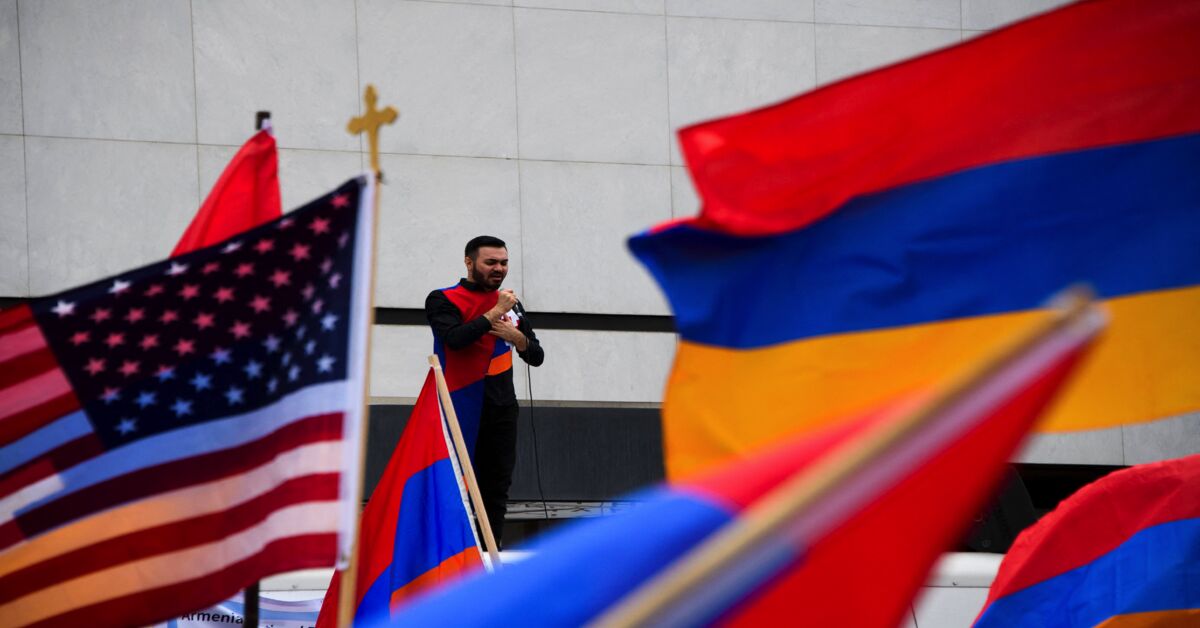
Lobbying is a normal part of American political life. In the United States, community organisations and interest groups routinely try to influence lawmakers, shape public debate and defend the priorities of their constituencies. There is nothing unusual in that.
The problem begins when a lobby formally operating under an American political label starts promoting positions that appear to run against both regional peace and Washington’s own diplomatic achievements.
This is why the activity of the Armenian National Committee of America, better known as ANCA, deserves closer attention.
For years, ANCA has presented itself as the main voice of Armenian-American political advocacy. It campaigns on Capitol Hill, pressures legislators, opposes the removal of Section 907 restrictions against Azerbaijan and regularly pushes narratives hostile to Baku. None of this is new.
What is new, however, is the organisation’s increasingly open resistance to the peace agenda between Azerbaijan and Armenia — including the agreements reached in Washington.
The irony is hard to miss. The Washington understandings of August 2025 were one of the most visible diplomatic successes of the United States in the South Caucasus. They were backed by the American administration and signed by the leaders of Azerbaijan and Armenia. Yet ANCA representatives have repeatedly criticised these arrangements and opposed initiatives connected to them, including regional connectivity projects such as TRIPP.
This raises a serious question: is ANCA lobbying for Armenian-American interests, or is it fighting against the elected government of Armenia itself?
After all, Prime Minister Nikol Pashinyan has accepted the peace track with Azerbaijan. He has repeatedly spoken about the need to close the chapter of conflict and move Armenia toward a new regional reality. ANCA, by contrast, continues to promote positions that keep Armenia tied to the logic of confrontation.
The issue becomes even more sensitive when one looks at the Armenian political field. During Armenia’s recent election campaign, ANCA’s rhetoric and political sympathies appeared much closer to anti-Pashinyan and pro-Russian circles than to the official line of the Armenian government.
Particular attention has been drawn to figures such as Samvel Karapetyan, often described as one of the key representatives of the old Moscow-linked Armenian elite. Karapetyan has long been associated with political and financial networks that oppose Pashinyan’s westward course and seek to preserve Armenia’s dependence on Russia.
There are also broader concerns about the role of Russian-linked Armenian oligarchic circles in international campaigns against Azerbaijan. In previous controversies, names of wealthy Armenian businessmen with deep Russian connections have surfaced in connection with efforts to influence European political platforms and promote anti-Azerbaijani resolutions.
ANCA’s position toward the Armenian Church has added another layer to these questions. When Pashinyan accused parts of the church hierarchy of being influenced by Russian security networks, ANCA quickly sided with the church. Formally, this could be explained as defence of religious tradition. Politically, however, it placed the organisation once again on the side of forces resisting Armenia’s break with Moscow’s orbit.
Even ANCA’s reaction to developments around Iran has raised eyebrows. At a time of heightened US-Iran tensions, senior figures associated with the organisation openly stressed Iran’s importance for Armenia and referred to the country as a friend and ally. Such statements may be understandable from the perspective of Armenian regional calculations, but they sound striking when coming from a lobby operating inside the American political system.
The historical background makes the picture even more complicated.
During the Cold War, Soviet intelligence paid close attention to diaspora structures from across the USSR, including Armenian organisations abroad. The so-called Mitrokhin Archive and later accounts by former Soviet officials have repeatedly suggested that Moscow maintained contacts with a wide range of ethnic, ideological and militant networks outside the Soviet Union.
Armenian radical groups of the 1970s and 1980s were also part of a wider environment in which Soviet and Middle Eastern intelligence services frequently interacted with anti-Western and anti-Turkish militant organisations. Former KGB figures have claimed that some Armenian nationalist structures abroad operated under varying degrees of Soviet influence or supervision.
This history does not automatically prove anything about today’s organisations. But it does make ANCA’s current political behaviour worthy of scrutiny, especially when its positions so often align with the interests of those who want to weaken the Azerbaijan-Armenia peace process, undermine TRIPP and prevent Armenia’s strategic distancing from Russia.
The central contradiction is obvious.
The United States has invested political capital in peace between Azerbaijan and Armenia. Azerbaijan and Armenia have taken direct steps toward normalization. Pashinyan’s government, despite internal pressure, continues to speak the language of peace and regional opening.
ANCA, however, appears to be working in the opposite direction.
It opposes key elements of the Washington track. It attacks Azerbaijan with maximalist rhetoric. It gives political cover to forces hostile to Pashinyan’s peace agenda. And in practice, its line often benefits those who want Armenia to remain dependent, isolated and trapped in the logic of permanent conflict.
This is no longer just a matter of diaspora activism. It is a question of political transparency.
American institutions have every reason to look more carefully at lobbying networks that claim to represent community interests while advancing positions that may serve external geopolitical agendas. After recent corruption scandals involving foreign lobbying on Capitol Hill, this issue should not be ignored.
The question is simple: whose interests does ANCA really defend?
The interests of Armenian-Americans? The interests of peace in the South Caucasus? The interests of the current Armenian state?
Or the interests of forces that would rather see Armenia remain a tool in Moscow’s regional game?
The answer matters not only for Azerbaijan and Armenia. It matters for the credibility of American diplomacy in the South Caucasus.
Related Posts

Previous Post
Next Post

- Aliyev says Turkic world is emerging as a major center of influence

- Baku hosts Turkic World Week honouring landmark 1926 Turkological Congress

- EU envoy holds talks in Baku ahead of high-level engagement with South Caucasus

- Europe must not lose Azerbaijan: Oleksiy Goncharenko on the risks of confrontation between Baku and the Council of Europe

- A leader forged by patience and victory