
Now Reading: Kocharian may end up like others: on the defendants’ bench in Baku
-
01
Kocharian may end up like others: on the defendants’ bench in Baku

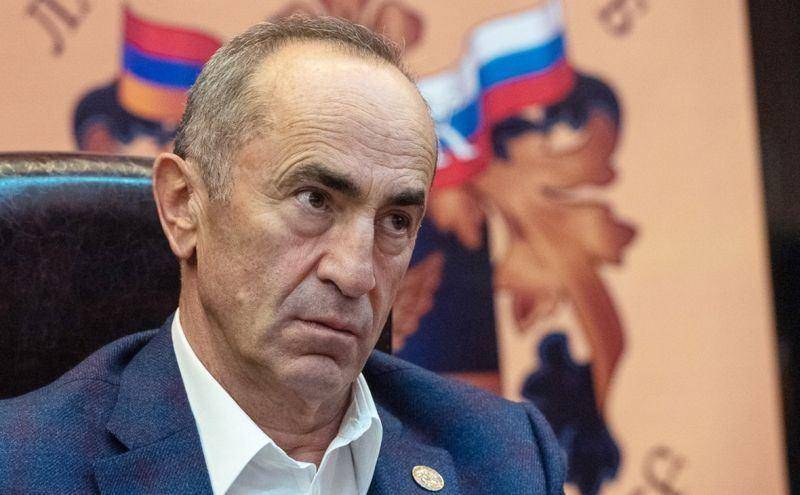
History rarely forgives those who try to pass off their own mistakes as external circumstances. Memory, like facts, is stubborn: it cannot be erased by loud statements or rewritten after the fact. One can speak endlessly about “wars that never happened” and “peace that was preserved,” but the past does not tolerate the subjunctive mood. It exists in facts, consequences, human destinies, and in the price entire nations pay for the decisions of their leaders.
Politics devoid of accountability inevitably collides with reality. And when it does, illusions collapse especially loudly, because they were built not on truth, but on convenient myths.
Robert Kocharian’s claims that the 2020 war “would not have happened under him” sound less like analysis and more like an attempt to rewrite history. His rhetoric borders on a textbook example of political cynicism—shaped by selective memory and an extensive record of decisions that helped lead the region to catastrophe.
And yes, that so-called “peace.” The same “peace” under which nearly 20% of Azerbaijan’s internationally recognized territory remained under occupation. The same “peace” during which hundreds of thousands of Azerbaijanis were driven from their homes. The same “peace” where the line of contact regularly turned into a line of fire. If that is “peace,” then a gunpowder depot could just as well be called a recreational zone.
The architects of the conflict posing as peacemakers—Robert Kocharian and his political ally Serzh Sargsyan—were neither neutral observers nor victims of circumstance. They were central figures in a system built on the occupation of чужих territories, militarization, rejection of compromise, and the cultivation of revanchist ideology.
And today, these same figures speak of “preserved peace.” It resembles a tragicomedy in a single act.
The regime they created can hardly be described as a normal political system. In practice, it functioned as a military junta sustained by force, fear, and external backing. It is widely understood who stood behind this system and where its political, financial, and military resources came from. Without that support, this structure would have long collapsed like a house of cards.
In fairness, the outcome of their policies was predictable—though they still seem to pretend surprise.
The result is clear: the defeat of the Armenian army; the loss of control over occupied territories; the collapse of the ideology of “permanent occupation”; and a deep political and moral crisis within Armenia itself.
For these politicians, the realization that living indefinitely off чужих lands is not a strategy but a costly illusion appears to have come as a revelation. For Armenia, the key post-war lesson is that no one is rushing to save regimes built on occupation and aggression. Nor is anyone willing to indefinitely subsidize someone else’s political fantasies.
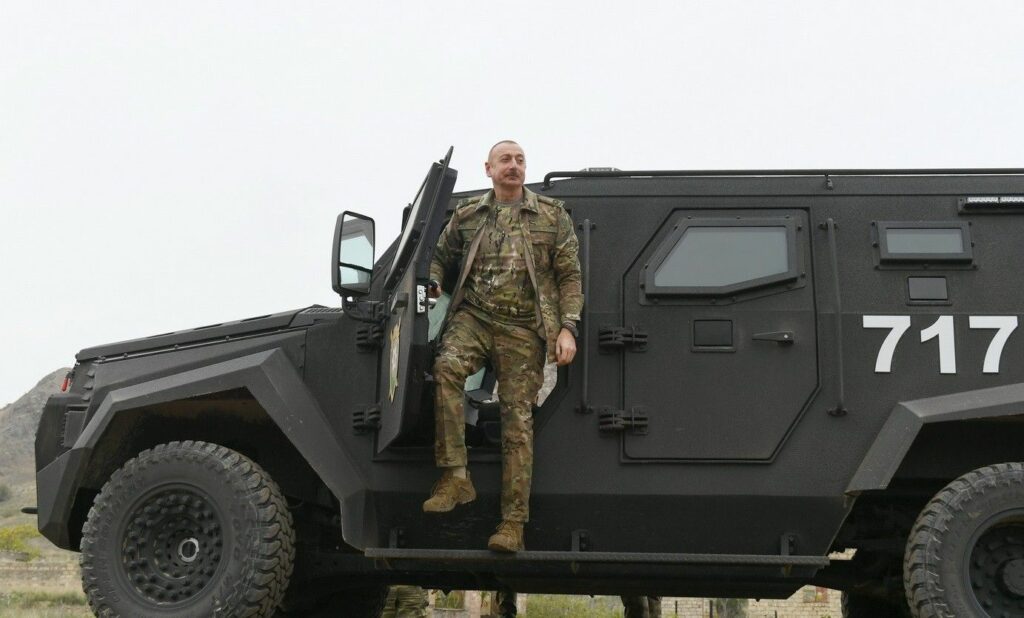
Azerbaijan’s victory in the 44-day war of 2020 not only restored the country’s territorial integrity but also dismantled the entire system that Kocharian and Sargsyan had carefully constructed.
President Ilham Aliyev has repeatedly emphasized that the victory was achieved over precisely this model of aggression, occupation, and political stagnation.
Yet today, the creators of that model attempt to explain how they were “preserving peace.” It is akin to an arsonist complaining about a fire.
Holding чужих territories, planning further expansion, and rejecting negotiations can be called many things—but not “peace.” To label it as such requires ignoring reality and replacing it with a convenient fragment of a distorted narrative.
As for attempts at revanchism and their consequences: any effort to return controversial figures like Kocharian, Sargsyan, or other representatives of the old system to power poses a potential challenge to regional security. This can hardly be framed as merely Armenia’s internal affair.
Meanwhile, Azerbaijan has clearly articulated its position: there will be no return to the policies of the 1990s and early 2000s; revanchism will not be tolerated; and, if necessary, preventive measures will be taken.
It is time for politically exhausted actors to understand that this is not a whim of Baku or empty rhetoric, but a conclusion drawn from real experience. The futility and ineffectiveness of these outdated political figures only reinforce the credibility of Baku’s stance.
At the same time, the question of accountability has not disappeared. On the contrary, it is becoming increasingly relevant. Anyone who believes history will simply erase everything is indulging in yet another illusion. Under certain circumstances, figures like Kocharian could well find themselves in court, answering for their decisions—as others already have.
For Armenian society, there is a far more pressing question than nostalgia for a “strong hand.” If the country chooses not the path of peace, economic development, stability, and security, but instead a return to conflict-driven policies, it risks sliding back into isolation and incurring new losses on every level.
And here, the irony fades—because the cost of such mistakes is already known. It is measured not in slogans or populist appeals for power, but in human lives and shattered destinies.
Baku has made it unequivocally clear that the realities of the late 1980s and early 1990s will not be repeated. Armenian revanchism will remain stunted, with only one foreseeable trajectory—gradual decay. And no attempt to rewrite the past will alter the facts.
Alla Zeydullayeva
Related Posts

Previous Post
Next Post
- Aliyev says Turkic world is emerging as a major center of influence

- Baku hosts Turkic World Week honouring landmark 1926 Turkological Congress

- EU envoy holds talks in Baku ahead of high-level engagement with South Caucasus

- Europe must not lose Azerbaijan: Oleksiy Goncharenko on the risks of confrontation between Baku and the Council of Europe
- A leader forged by patience and victory