Now Reading: So who in Armenia is preparing for a revanche?
-
01
So who in Armenia is preparing for a revanche?

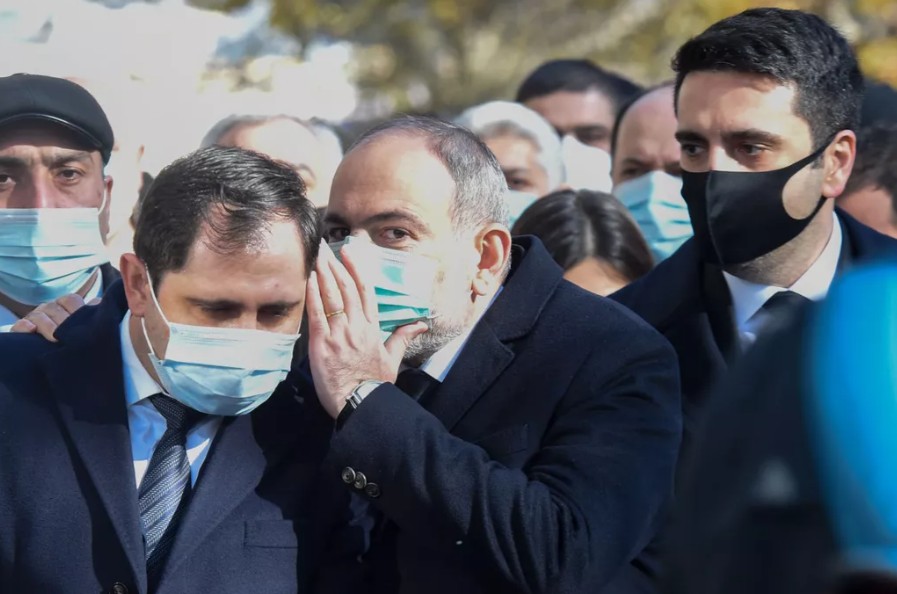
Curious signals are coming out of Armenia—more precisely, from its army and Ministry of Defense. According to media outlets closely linked to the military leadership and the defense establishment, changes are planned to bonuses for special forces units, as well as to the calculation of additional payments for “servicemen on combat duty along the new line of contact formed after the 2020 hostilities.”
The relevant decision, reports say, was adopted at a government meeting. Armenian army special forces already receive bonuses under special conditions, but the parameters and amounts vary. The new system is intended to simplify the calculation process. In 2026, the Ministry of Defense is expected to allocate around 3.5 billion drams (about $9.2 million) in budget funds for these additional payments. Yerevan thus aims to make service in special forces, special operations, and intelligence units more attractive.
Of course, any country has the right to decide how much to pay its uniformed personnel. But the choice of beneficiaries—special forces, special operations, and intelligence units—is at the very least indicative and raises questions. This alone does not justify claims that Armenia is shifting to a “North Korean model,” where emphasis is placed on such units. Nor is it necessarily fair to draw direct parallels with traditions of political terror or sabotage warfare in Armenian society. However, the use of the term “new line of contact formed after the 2020 hostilities” is far more significant.
It should be recalled that before 2020, the “line of contact” officially referred to the line where Azerbaijani and Armenian forces halted after the ceasefire agreement. Following the 44-day war, Azerbaijan forced occupying forces out of the Araz River valley and regained control—largely without combat—over most of the Lachin, Kalbajar, and Aghdam districts. A new “line of contact” emerged, where Russian peacekeepers were deployed.
But in September 2023, after anti-terror operations, Azerbaijan restored full sovereignty over its territory, and that second “line of contact” ceased to exist. In other words, what is now being referred to in Yerevan as a “line of contact” is, in fact, the state border with Azerbaijan. Yes, parts of this border remain undelimited and undemarcated, but it is nonetheless an international border. Referring to it as a “line of contact” contradicts recognition of Azerbaijan’s territorial integrity—and this terminology is being used not by fringe revanchist voices, but by structures close to the government of Nikol Pashinyan.
Moreover, Armenia has been actively recruiting reserve officers back into the armed forces. It is worth recalling that in the past, groups such as “Yerkrapah,” made up of veterans of the first Karabakh war, were mobilized ahead of armed provocations and during preparations for what was described as a “new war for new territories.” This raises a legitimate question: what exactly is happening? Is Yerevan once again preparing for a revanche—and is this reflected not only in rhetoric but also in the actions of the Ministry of Defense?
At the same time, a more sober assessment is needed. Today, Pashinyan presents himself as a committed advocate of a peace agenda. Yet he did not come to power under slogans of peace. He presided over the inauguration of Arayik Harutyunyan in what was then occupied Shusha, declared “Artsakh is Armenia, period,” and brought into his team figures who supported missile strikes on Azerbaijani cities. His defense minister at the time openly spoke of a “new war for new territories,” including the creation of assault units to conduct sabotage operations behind enemy lines.
After losing two wars, however, he has repositioned himself as a proponent of peace. Such rhetoric is no longer heard from official platforms. Still, the actions of Armenia’s Ministry of Defense warrant close attention.
Another point is that if any attempt is made to translate revanchist plans into practice, the Armenian army may find itself recalling the experience of its retreat in the autumn of 2020. Azerbaijan supports a peace agenda but remains prepared for any scenario. Any provocations, especially armed ones, will be met with a response.
Nurani
Related Posts

Previous Post
Next Post
- Aliyev says Turkic world is emerging as a major center of influence
- Baku hosts Turkic World Week honouring landmark 1926 Turkological Congress

- EU envoy holds talks in Baku ahead of high-level engagement with South Caucasus
- Europe must not lose Azerbaijan: Oleksiy Goncharenko on the risks of confrontation between Baku and the Council of Europe
- A leader forged by patience and victory