Now Reading: South Caucasus tensions come to a head at UNSC Special Session
-
01
South Caucasus tensions come to a head at UNSC Special Session

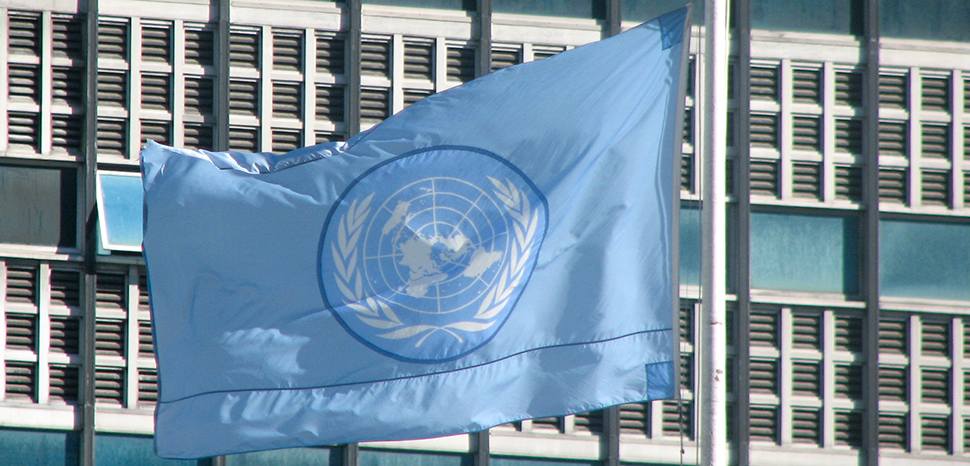
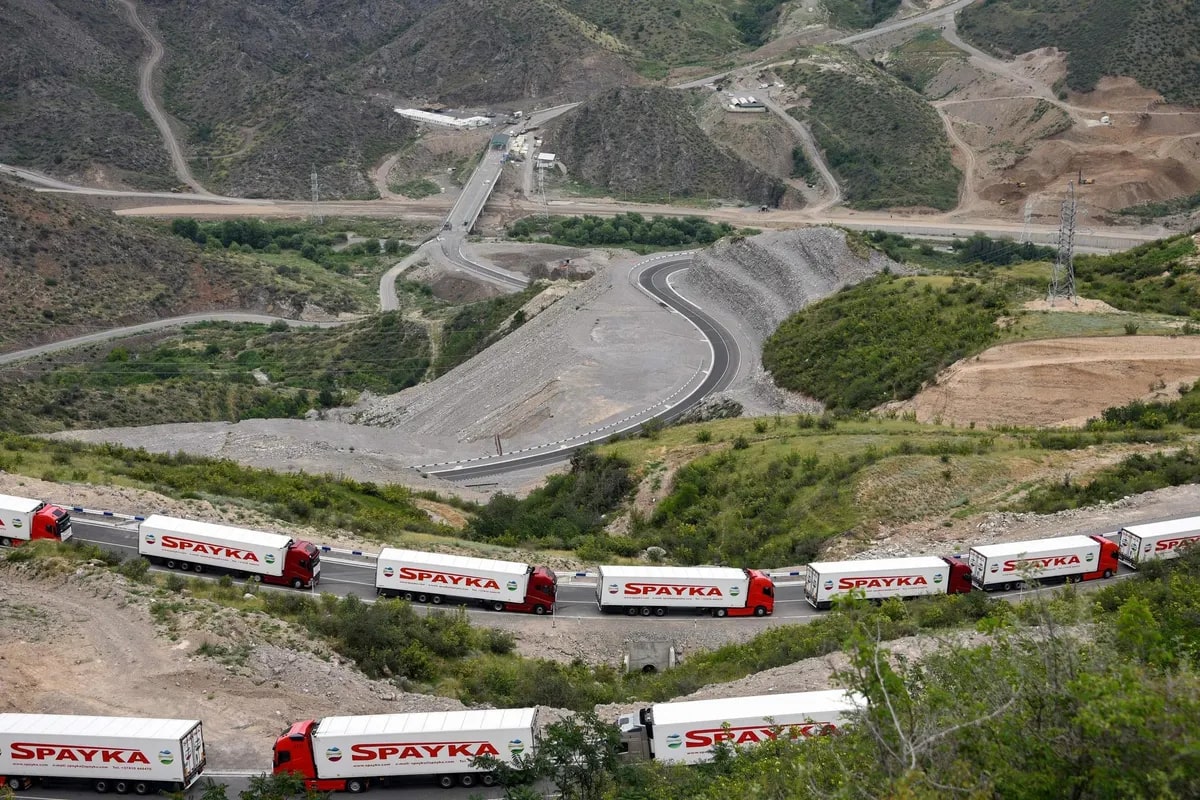
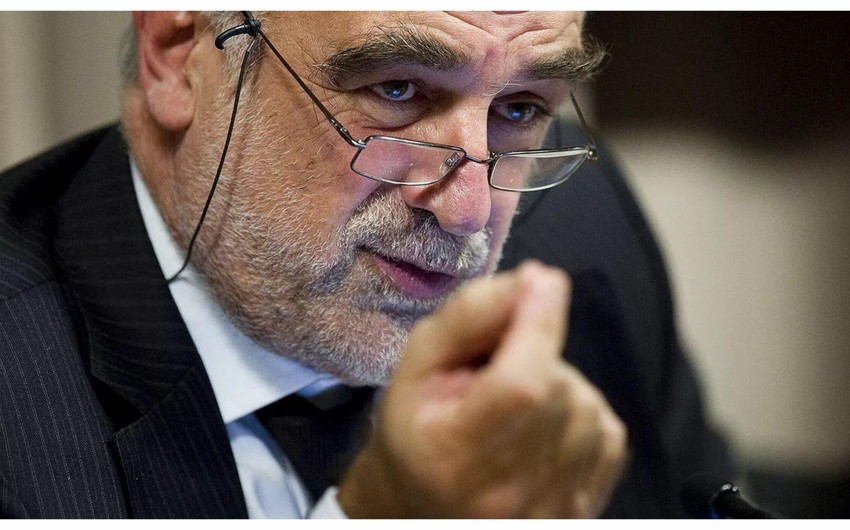
The Lachin road is an integral part of the territory of Azerbaijan that connects the main body of Armenia to the still un-deoccupied region of the former Karabakh. The most recent highlight of this media campaign is the recent Opinion published by Luis Moreno Ocampo, the first Prosecutor of the International Criminal Court (ICC).
Ocampo’s opinion repeats claims, propagated by the Armenia diaspora for months, that Azerbaijan is perpetrating a genocide against the ethnic Armenians in Karabakh. It is rather surprising that he refers to the “President” of “Artsakh”, the Armenian name for the so-called “Republic of Nagorno-Karabakh” that for twenty years asserted sovereignty not only over Karabakh but also over seven unrelated administrative regions of Azerbaijan.
No country in the world, not even Armenia itself, ever recognized the “Republic of Nagorno-Karabakh”. Since the end of the Second Karabakh War in November 2020, official Yerevan including Nikol Pashinyan as prime minister has made multiple public statements recognizing the territorial integrity of Azerbaijan, including over the whole of the Karabakh region. The UN Security Council made such a recognition thirty years ago through four Resolutions adopted while the original military hostilities were still ongoing.
In early July this year, the International Court of Justice (ICJ) rejected the Armenian allegation that Ocampo’s Opinion assumes foundationally to be true. Armenia had alleged Azerbaijan was impeding traffic along the road by establishing military checkpoints. This was a reference to Azerbaijan’s exercise of its right under international law to establish a border post on the Lachin road not far from where it passes from Azerbaijan into Armenia. According to extensive videographic evidence published on social media, ethnic Armenians from the un-deoccupied area in Azerbaijan pass through this border post on a daily basis without problems.
For over twenty years, passage on the Lachin road had been unchecked. Through it, the armed forces of the Republic of Armenia—as the European Court of Human Rights found in 2015 that these were not forces of the so-called “Republic of Nagorno-Karabakh”—had reinforced and resupplied its troops who continued to occupy Azerbaijan’s sovereign territory. They are now estimated to number about ten thousand. Extensive satellite and drone photography in the public domain establish without doubt that transfers of personnel and matériel by the Armenian side continued after the cessation of hostilities in November 2020.
The forces of the Republic of Armenia have not only supplied their troops there and reinforced old military installations but also constructed new ones. All of this took place under the eyes, and even with the active connivance, of the so-called peacekeepers deployed there by Russia in accord with the November 2020 Trilateral Statement, negotiated in Moscow, that put an end to the military hostilities of the Second Karabakh War.
The ICJ, in its rejection of the petition about the Lachin road from the Government of Armenia in June, noted inconsistencies in Armenia’s submission, concluded that nothing that had changed on the ground, and made no new findings. In particular, it did not find that Azerbaijan had not complied with its own previous order or otherwise violated international law.
It bears repeating that Ocampo’s Opinion treats as facts the Armenian pretensions that the ICJ has rejected as lacking a factual basis. Ocampo inflames the situation by assuming, without even the pretense of offering any proof, the intent of genocide (legally defined as the “intent to destroy, in whole or in part, a national, ethnical, racial or religious group as such”) on the part of the Government of Azerbaijan. Ocampo’s lack of seriousness is underlined by unsubstantiated claims concerning the alleged individual criminal responsibility of the President of Azerbaijan personally.
There are four possible outcomes to a Special Session of the UN Security Council (UNSC) on this question. The first is the adoption of an official Resolution, which would have the force of international law. It would require affirmative votes from nine out of the fifteen current UNSC members, and the absence of a veto from any of the five permanent members. The second is the adoption of a “sense of the Council” statement. This would require unanimous consensus of the fifteen current members and would be non-binding under international law. The third is a unilateral statement by the Presidency of Council, occupied this month by the United States. The fourth is the lack of any substantive action at all. The last of these would be the most constructive. Any of the other three threatens the process. Let us examine these in turn.
- A Resolution is a formal expression of the opinion or will of the UNSC. For a resolution to be adopted, it requires an affirmative vote of at least nine of the 15 members, including the concurring votes of all five permanent members (unless one or more of them abstain or are absent). This seems unlikely, because Azerbaijan is a highly respected former President in Office of the Non-Aligned Movement (NAM), and there are enough NAM members on the UNSC right now to deny the nine votes needed for a Resolution.
- A Sense of the Council Motion is a less formal and nonbinding expression of the UNSC’s opinion; however, it requires unanimous consent. It is not certain that every NAM member of the Council would refrain from objecting. This would depend on the power-political dynamics between each of them individually and each of the Permanent Members.
- A Unilateral Statement is made by the UNSC President and signifies that the country that is President is expressing a view without the full backing of all UNSC members. For the month of August, the United States is President of the Security Council. It would be odd for the U.S. to make such a Statement, because Secretary of State Antony Blinken has invested so much effort and personal prestige in the real diplomatic successes achieved up until now.
But the U.S. Mission to the United Nations in New York has sometimes been something of an “independent operator” in U.S. diplomacy, ever since President John F. Kennedy made Adlai Stevenson the country’s Permanent Representative (the technical name for the Head of Mission to an international organization) there and exceptionally give him Cabinet rank. Whether the U.S. Permanent Representative—who usually has the “rank” of Ambassador within the State Department—is or is not of Cabinet rank depends on the decision of the President. Most but not all Democratic Party presidents have followed Kennedy.
The current U.S. Permanent Representative, Linda Thomas-Greenfield, does have Cabinet rank. This means that it is likely that she does not have to report to the State Department’s Bureau of International Organization Affairs. That means that her relationship with Blinken, and her Mission’s relationship with his peace efforts, is not a subordinate one.
That in turn raises the possibility that her Mission may act against those efforts. What it reveals is that the Armenian diaspora, who have inspired the months-long campaign now culminating in New York, is trying to use the U.S. Permanent Mission to the United Nations to make an “end run” around the Department of State and around the Secretary of State personally. A comparison of past public statements by different members of the U.S. Mission suggests that there may even be subtle divisions over this issue within the Mission itself.
- The best result of this whole procedure would be the absence of any formal Resolution, Motion, or Statement. Even a Unilateral Statement by the U.S. as UNSC President would undercut all the progress of the last year, for obvious reasons. It would severely embarrass Secretary of State Blinken. Since he has been coordinating his efforts with those of Charles Michel, who has held numerous meetings with Pashinyan and Aliyev in Brussels, it would also torpedo Michel’s constructive initiatives.
The whole public-relations campaign around Karabakh, now culminating in the UNSC Special Session, works in the interests of Russia, Iran, and France. Since its independence in the early 1990s, Armenia has been a client state (some say a vassal state) of Russia and an ally of Iran, where the military-industrial complex has accelerated its penetration of Armenia industry since the end of the Second Karabakh War in November 2020. As for France, Armenia is simply an instrument for use against Turkey, with which it has long-standing sphere-of-influence conflicts in North Africa, the East Mediterranean, and now the South Caucasus.
Robert M. Cutler is a past fellow of the Canadian Global Affairs Institute.

Related Posts
Previous Post
Next Post
- Aliyev says Turkic world is emerging as a major center of influence
- Baku hosts Turkic World Week honouring landmark 1926 Turkological Congress

- EU envoy holds talks in Baku ahead of high-level engagement with South Caucasus
- Europe must not lose Azerbaijan: Oleksiy Goncharenko on the risks of confrontation between Baku and the Council of Europe
- A leader forged by patience and victory