“What benefit is there for us if Armenia turns from a Russian outpost into a French one?”

Aze.NewsInterview21 May 202690 Views

Tofig Zulfugarov

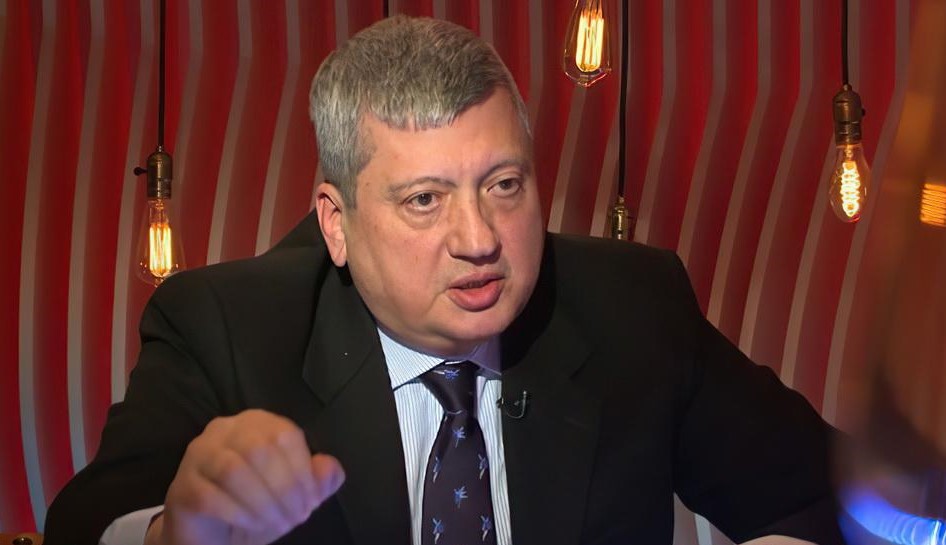
In Azerbaijan, people are prematurely celebrating the so-called peace rhetoric of Armenian Prime Minister Nikol Pashinyan. His loud statements about peace and distancing Armenia from Moscow have so far not been followed by a single fundamental step that would indicate Yerevan’s real abandonment of its previous policy. This opinion was expressed in an interview with Minval Politika by former Azerbaijani Foreign Minister Tofig Zulfugarov.

The former minister made it clear that Pashinyan’s current line is more tactical in nature, while part of the Azerbaijani media community is too quick to interpret the Armenian prime minister’s statements as proof of a final turn toward peace.

The diplomat believes that the Armenian prime minister’s statements should be judged not by words, but by concrete actions — primarily in matters related to constitutional amendments, the renunciation of territorial claims, and the fulfillment of obligations connected with the recognition of the administrative borders of the former Soviet republics.

According to the former foreign minister, Yerevan has historically recognized certain political realities only when it no longer had the resources to resist.

“All other issues were recognized only when there was no longer any strength left to resist,” he said.

He recalled that the interpretation of the Alma-Ata Declaration implies the recognition of the administrative borders of the former Soviet republics as state borders.

“It is on this basis that diplomatic relations between states should be built. Let me remind you that Armenia itself effectively did not recognize these borders for a long time, and in the late 1980s it put forward territorial claims against Azerbaijan,” he noted.

According to him, without constitutional amendments and a corresponding referendum, it is premature to speak of a full-fledged peace settlement.

“For us, the key issue is what will happen during the referendum, if it is announced at all,” Zulfugarov added.

The former foreign minister believes that the current political campaign in Armenia is largely aimed at allowing Pashinyan, even after his re-election, to claim that holding a referendum is impossible. In his view, this explains the delay in the signing of the peace agreement.

He separately criticized the Armenian side’s approach to the issue of mutual recognition of territorial integrity. According to the diplomat, Yerevan is trying to present the very fact of mutual recognition as the final consolidation of borders favorable to itself, even though the processes of demarcation and delimitation have not yet been completed.

“Well, he walks around with that badge on his chest… They want to obtain this ‘badge’ — mutual recognition of territorial integrity — and present it as the final recognition of all their demands,” he said.

Zulfugarov recalled that the administrative borders between Soviet republics changed several times during the Soviet period. Therefore, the question of which specific period’s borders should form the basis of a future settlement remains a matter of principle.

Commenting on Pashinyan’s peace rhetoric, the diplomat also expressed skepticism about the demonstrative cooling of relations between Yerevan and Moscow. He pointed to the continuing growth of trade between Armenia and Russia, the preservation of Russian military infrastructure, and the absence of real steps to reduce Russia’s presence.

“Not a single military base has left. They replaced two border guards at the airport — and that’s it. Nothing has actually happened,” he noted.

In his opinion, public conflicts between the Armenian authorities and Russian propagandists may largely be demonstrative in nature. Moreover, Zulfugarov admitted that, from the point of view of predictability, “an open Kocharian” would be preferable for Azerbaijan to “a cunning Pashinyan.”

“What benefit is there for us if Armenia turns from a Russian outpost into a French one?” the diplomat asked.
He also drew attention to the fact that in Pashinyan’s party program, the Karabakh issue is being shifted from the territorial dimension into the field of human rights. In the long term, this could be used to advance demands for the return of Armenians to Karabakh under international security guarantees.

“Later, they will fight for a return to Karabakh through the issue of human rights and international control,” he believes.

The diplomat expressed separate concern over the activity of the Armenian diaspora and foreign structures which, in his opinion, continue to coordinate their actions with official Yerevan.

Speaking about the prospects for implementing transport projects and the “Trump Route,” Zulfugarov said that Armenia is still avoiding specifics and, instead of discussing the conditions of transit, is proposing to focus solely on demarcation issues.

“Instead of showing under what conditions the transit of goods and people will be carried out, they say: let us carry out delimitation and demarcation. This is one of the signs that the Armenian side is trying to drag out the process and consolidate its own interpretations of future borders. In general, the situation must be assessed without emotion — neither positively nor negatively. The approach must be purely realistic. I am not a pessimist. I am a realist,” the diplomat concluded.

Loading Next Post...
Menu Search Dark Mode Light Mode
Loading

Signing-in 3 seconds...

Signing-up 3 seconds...