
Now Reading: Who in Türkiye was frightened by the Aliyev–Erdogan alliance?
-
01
Who in Türkiye was frightened by the Aliyev–Erdogan alliance?

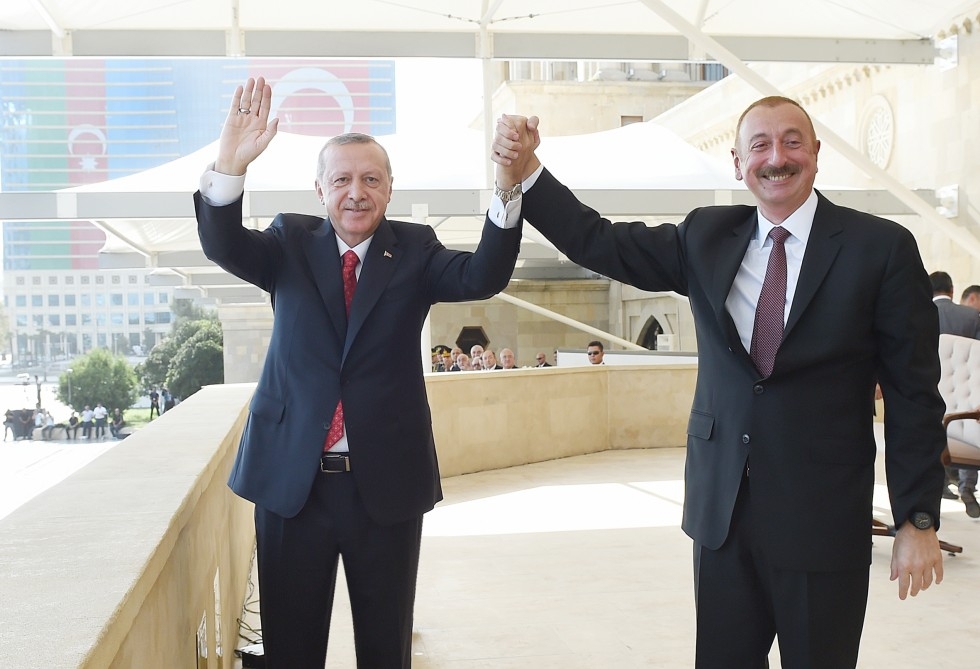
In history, as in biology, alliances between peoples and states rarely arise by chance. They are born out of a deep convergence of strategic interests, cultural affinity and historical memory. This is precisely the kind of alliance that today binds Türkiye and Azerbaijan — two states whose leaders do not merely coordinate policy, but effectively act as parts of a single strategic organism.
That is why the sudden wave of criticism in the Turkish segment of social media directed against Azerbaijan’s Ambassador to Türkiye, Rashad Mammadov, looks neither like a spontaneous outburst of emotion nor, still less, like a sign of any tension between the two countries. In reality, it is an attempt by a small group of marginal figures — mainly retired diplomats and journalists close to them — to operate from the shadows, creating artificial noise with calls to summon the Azerbaijani ambassador and lodge a protest, while trying to sow discord in relations that are entirely harmonious and at the highest level.
In his interview with the Turkish newspaper Cumhuriyet, the ambassador said nothing that went beyond Ankara’s official line. Asked whether Baku was really obstructing the opening of the Turkish-Armenian border, Rashad Mammadov answered with utmost clarity and constructiveness:
“We pursue a coordinated policy with Türkiye and remain in constant contact with the Turkish Foreign Ministry. The normalization processes between Türkiye and Armenia, as well as between Azerbaijan and Armenia, are moving in parallel. We act step by step and in coordination with each other. Armenia’s Constitution contains territorial claims against Azerbaijan. After the June 7 elections, they will amend the Constitution and hold a referendum. Once the territorial claims are removed, the peace treaty between Azerbaijan and Armenia, initialed in the United States, will be signed. After that, Armenia’s borders with Türkiye and Azerbaijan will be opened.”
Commenting on the start of direct trade, the ambassador noted that the sides are already taking “small steps”:
“Azerbaijan has also started trade with Armenia. We are already playing a role in ensuring its energy security by supplying oil and fuel. Wheat and other goods from Kazakhstan and Russia are also being delivered through Azerbaijan. We tell them: if there is peace, your security will also improve. Türkiye is also taking small steps.”
This is neither an ultimatum nor interference. It is a clear description of a coordinated roadmap, fully in line with what President Erdogan and the Turkish leadership have repeatedly stated.
The timing of these attacks is noteworthy: Armenia’s election campaign is drawing to a close, while just a few weeks earlier an attempt by French President Emmanuel Macron to use the closed Armenian-Turkish border as a stage for his own diplomatic performance was thwarted. According to sources, Macron planned in May to cross the border from Armenia into Türkiye, turning the gesture into a symbol of his own influence. Part of the Turkish side, it seems, was prepared to support the idea. However, following consultations with Baku, President Erdogan rejected the scenario.
This episode clearly demonstrated the post-2020 reality: in the South Caucasus, Turkish power is realized not in opposition to Azerbaijan, but through the closest possible alliance with it. To ignore this fact is to ignore the changed balance of regional power.
Here we encounter a classic phenomenon well known from the history of liberal elites: Western-educated diplomats from wealthy families whose views are shaped not so much by Türkiye’s national interests as by the cosmopolitan norms of the Brussels-Paris establishment. For them, a strong and self-confident Azerbaijani-Turkish tandem looks like an anachronism — a relic of “ethnic nationalism” in a world that, in their view, should be moving toward a post-national order. They prefer to see Türkiye as a “bridge between civilizations,” ready for compromises with Armenia and the West even at the cost of weakening its key ally.
Yet history teaches us that such elites are often detached from reality. After the end of the Cold War, many believed that nation-states and ethnic alliances would fade into the past under the pressure of globalization and liberal democracy. Reality proved more complex. In the South Caucasus, it is precisely firm alliances based on shared identity and common threats that demonstrate the greatest resilience.
So who is really behind this campaign?
First, those circles in Armenia that still hope to play the “Turkish card” separately from Azerbaijan. Second, part of French and broader Western diplomacy, which sees the weakening of the Azerbaijani-Turkish alliance as a chance to regain lost levers of influence. And third — especially importantly — a small layer within Türkiye itself. For these people, admitting that twenty-first-century Türkiye acts most effectively precisely in alliance with Turkic Azerbaijan is tantamount to an ideological defeat.
Relations between Ilham Aliyev and Recep Tayyip Erdogan today go far beyond diplomacy. This is not simply friendship — it is the embodiment of a deep historical process: the revival of the Turkic world after a century of fragmentation and external pressure.
The campaign against Ambassador Mammadov is not a crisis in relations between Baku and Ankara. It is the convulsion of those who cannot accept that history in the South Caucasus has not followed the scenario they imagined in Western university lecture halls. The alliance between Azerbaijan and Türkiye remains one of the most stable and dynamic factors in regional politics. No social media posts, no campaign, and no chorus of supporters can change this fundamental reality.
As at the end of the Cold War, real history is written not in the salons of cosmopolitan elites, but on the fields of real politics, where interests, identity and power still determine the course of events.
Maqsud Salimov
Related Posts
Previous Post
Next Post
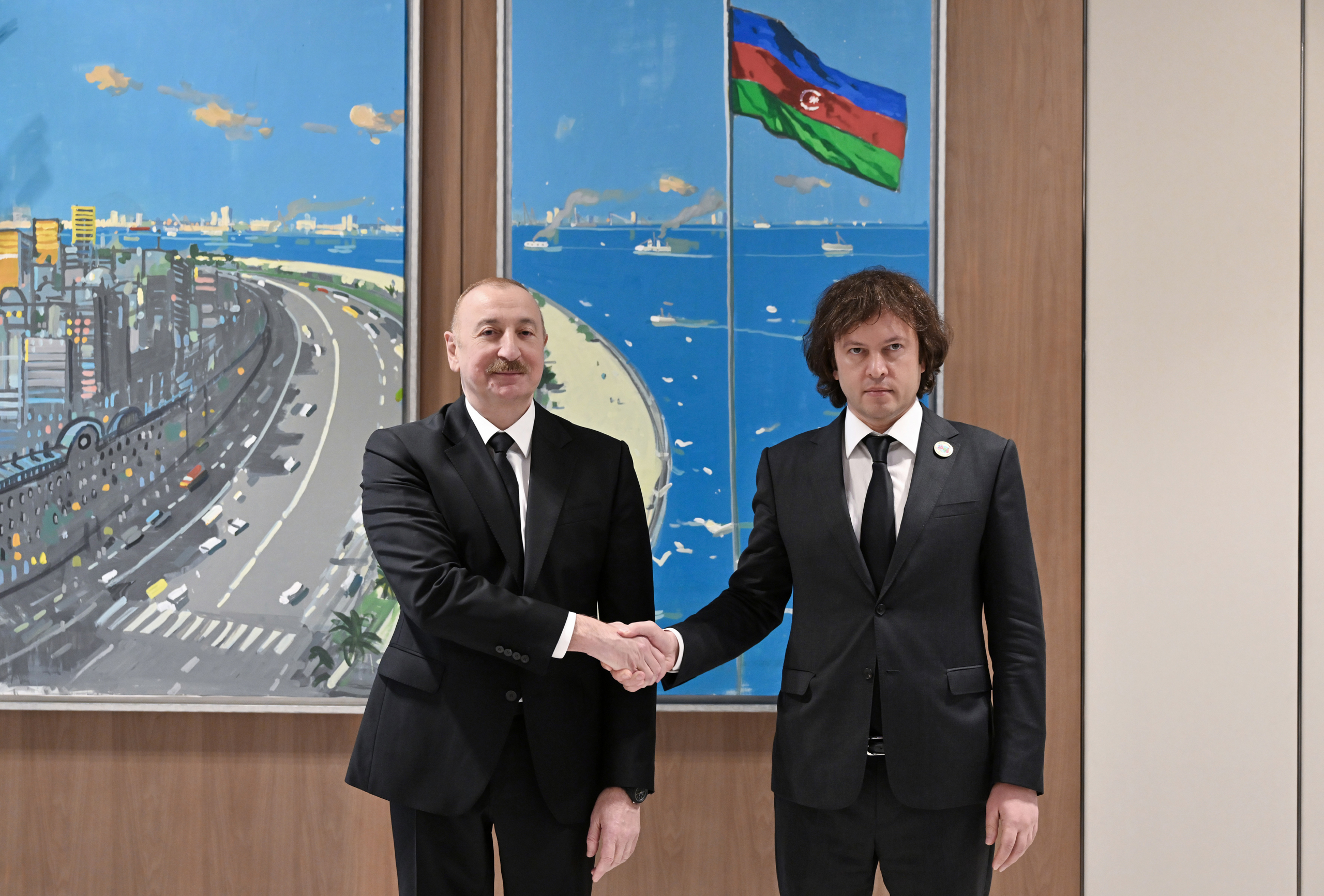
- Aliyev says Turkic world is emerging as a major center of influence

- Baku hosts Turkic World Week honouring landmark 1926 Turkological Congress

- EU envoy holds talks in Baku ahead of high-level engagement with South Caucasus
- Europe must not lose Azerbaijan: Oleksiy Goncharenko on the risks of confrontation between Baku and the Council of Europe
- A leader forged by patience and victory