
Now Reading: An anti-Azerbaijan scenario for the Ukrainian reality
-
01
An anti-Azerbaijan scenario for the Ukrainian reality

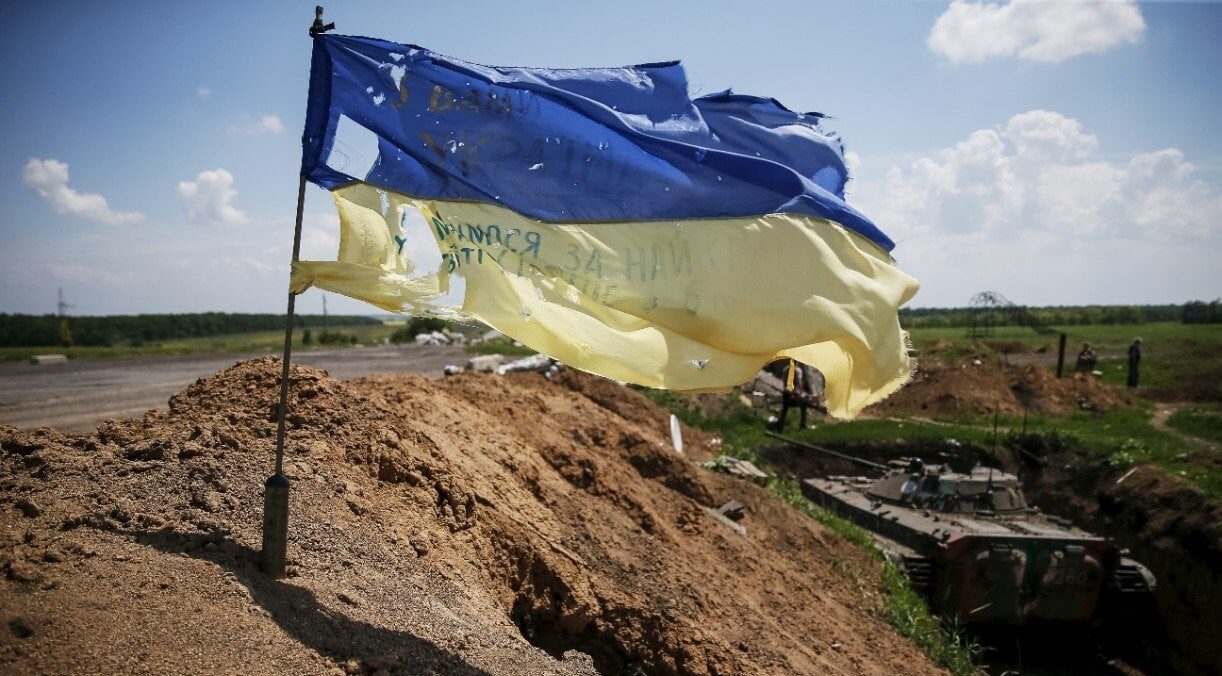
In recent years, European politics has increasingly revealed a troubling tendency: instead of exerting pressure on the aggressor, efforts are often redirected toward those in a more vulnerable position. This shift is particularly visible in the context of the Russia–Ukraine war. As the conflict drags on, European leaders appear to be acting in ways that run counter to strategic logic.
This posture is not unfamiliar to Azerbaijan. The country has experienced a similar approach firsthand in its own conflict history.
For nearly three decades of the Armenia–Azerbaijan conflict—and even after its conclusion—European policymakers frequently adopted a one-sided stance. Disregarding the principles of international law, they advanced narratives in which the aggressor, Armenia, was at times portrayed as the victim, while Azerbaijan was cast in the opposite role. There were even suggestions that Baku should accept the status quo and relinquish its occupied territories. That approach ultimately failed.
It must be acknowledged that, for a long time, the Armenian side effectively communicated its narrative to Western audiences, while Azerbaijan’s position and arguments were consistently overlooked.
A similar dynamic can now be observed in relation to Ukraine. European leaders are increasingly urging Kyiv to demonstrate flexibility, make compromises, or reconsider its positions. Formally, this is framed as a desire for peace, but in practice it raises questions about the preservation of Ukraine’s territorial integrity.
However, the parallels between Ukraine and Azerbaijan largely end there. Unlike Baku, Kyiv has received extensive support from the very beginning of its confrontation with Moscow—support that continues today. This includes not only the European Union but also the United States, which has played a decisive role in providing financial, military, and political assistance. This factor significantly alters the balance and enables Ukraine to maintain resilience despite the protracted nature of the conflict.
Initially, this support was accompanied by firm and unequivocal statements from European leaders. French President Emmanuel Macron repeatedly emphasized that France would support Ukraine until victory and would not allow aggression to be rewarded. He also stressed the need to strengthen Europe’s defense capabilities to prevent such crises from threatening the continent’s security.
A similar position was expressed by European Commission President Ursula von der Leyen, who stated that the European Union would stand by Ukraine for as long as necessary. Her remarks highlighted long-term support, including financial aid, arms deliveries, and humanitarian programs. Over time, however, the burden of this support has become increasingly tangible for European countries themselves. Economic challenges, rising energy prices, and domestic social pressures are gradually reshaping public sentiment.
While unconditional support dominated the early phase of the conflict, more restrained assessments are now emerging. Politicians must take into account the views of their electorates, for whom foreign policy issues no longer appear as clear-cut. Notably, even those who once maintained a hardline stance are beginning to adjust their rhetoric. For example, German Chancellor Friedrich Merz—often regarded as a proponent of a more decisive course—recently stated that Ukraine may eventually have to accept the loss of part of its territory.
“At some point, Ukraine will sign a ceasefire agreement; at some point, hopefully, a peace treaty with Russia. Then, perhaps, part of Ukraine’s territory will cease to be Ukrainian,” he said.
Such statements suggest that similar appeals from European politicians may become more frequent, reflecting a broader shift in sentiment within Europe. At the same time, territorial concessions are being framed as a potential benefit for Ukraine, accompanied by the prospect of European Union membership. Yet this prospect remains highly uncertain. While Ukraine may hope for accession in the near term, for example by 2027, some European countries already consider even 2028 an unrealistic timeline.
The result is a situation that can be described as a gradual step back on Europe’s part. The rhetoric is becoming less categorical, and actions more cautious. This shift is likely also linked to sanctions policy.
Despite numerous packages of restrictive measures that have indeed created certain difficulties for the Russian economy, their overall impact has not always met expectations. While sanctions deliver periodic pressure, they have not fundamentally undermined economic resilience. At times, it creates the impression that this ongoing sanctions activity serves more as a symbolic gesture than a decisive instrument of change.
Fakhri Akifoglu
Related Posts
Previous Post
Next Post
- Aliyev says Turkic world is emerging as a major center of influence
- Baku hosts Turkic World Week honouring landmark 1926 Turkological Congress

- EU envoy holds talks in Baku ahead of high-level engagement with South Caucasus
- Europe must not lose Azerbaijan: Oleksiy Goncharenko on the risks of confrontation between Baku and the Council of Europe
- A leader forged by patience and victory