Now Reading: Azerbaijan did not get dragged into someone else’s war — and proved more far-sighted than many
-
01
Azerbaijan did not get dragged into someone else’s war — and proved more far-sighted than many
Azerbaijan did not get dragged into someone else’s war — and proved more far-sighted than many

The situation around Iran and the Strait of Hormuz continues to develop according to an increasingly unpredictable scenario. Donald Trump unexpectedly cancelled the previously announced operation “Project Freedom,” without explaining the reasons for the decision. At the same time, reports emerged about alleged agreements reached between Washington and Tehran on ensuring shipping in the Strait of Hormuz. However, similar leaks have appeared before — while real freedom of navigation in the region still does not exist.
Moreover, by early morning it became known that there had been a new exchange of strikes between the United States and Iran in the area of the Strait of Hormuz. CENTCOM stated that US forces had attacked Iranian military facilities in response to an attempt by the IRGC to strike American destroyers.
According to Washington, all Iranian missiles, drones and boats were destroyed, while the American side suffered no losses or damage. At the same time, the Tasnim news agency had earlier reported that Iran had attacked three US destroyers after an American strike on an Iranian tanker.
Donald Trump himself described the US response as a “light slap,” while also stating that, in his view, the ceasefire regime was still holding.
The idea was ambitious: to use military force to ensure freedom of navigation in the strait. This already strongly resembled the events of the Iran-Iraq War era, when the United States also offered tankers from Gulf countries, above all Kuwait, the opportunity to sail through the strait under American flags and with American military escort.
We should add that Washington has traditionally paid great attention to the security of maritime navigation since the 19th century. In those years, the United States was heavily dependent on maritime trade, and the issue of security at sea was of key importance for Washington.
Nevertheless, Donald Trump cancelled his “Project Freedom,” and this, as expected, triggered a serious wave of rumours.
Another leak, citing sources, has been published by NBC. According to its information, as Minval has already reported, the United States was forced to suspend Operation “Project Freedom” in the Strait of Hormuz after Saudi Arabia refused to grant American forces access to its bases and airspace.
It turns out that Trump announced the launch of his operation without coordinating it with Riyadh. In response, Saudi Arabia banned the use of the Prince Sultan Air Base and restricted flights by US aircraft. As a result, the United States faced problems in providing air cover for the convoys.
And after Trump’s conversation with Crown Prince Mohammed bin Salman, Washington was forced to freeze the operation roughly 36 hours after it began.
Of course, this leak can be questioned. The regional rivalry between Iran and Saudi Arabia is no secret to anyone. Moreover, Saudi Arabia has good reason to fear that Iran may try to provoke unrest among the kingdom’s local Shia population.
The Shia community in the kingdom makes up no more than 10 percent of the population, but it is concentrated in oil-producing areas. In addition, as already noted, the examples of Bahrain and Yemen are there for all to see — and in the case of Yemen, matters escalated into a proxy war between Riyadh and Tehran.
Be that as it may, against such a backdrop, Saudi Arabia clearly had no interest in disrupting a US anti-Iranian operation. All the more so because Riyadh, like the capitals of other oil monarchies, is more interested than anyone else in freedom of navigation through the Strait of Hormuz.
However, during the latest war between the United States and Iran, other realities also came to light. Tehran has no particular hesitation in striking countries where US military bases are located, especially those involved in the current operation.
And most importantly, Washington is in no hurry to protect its allies. As a result, in the Gulf countries, where US military bases were until recently regarded as the best guarantee of security, the situation is now changing. It has not yet come to mass demonstrations under the slogan “Yankees, go home” or demands to remove American bases, and such ideas are not exactly being voiced in government circles either. But the symptoms of disappointment are obvious.
There are more and more arguments in favour of the view that American bases are not only a guarantee of protection, but also a source of threat. Which considerations will prevail here remains a major question.
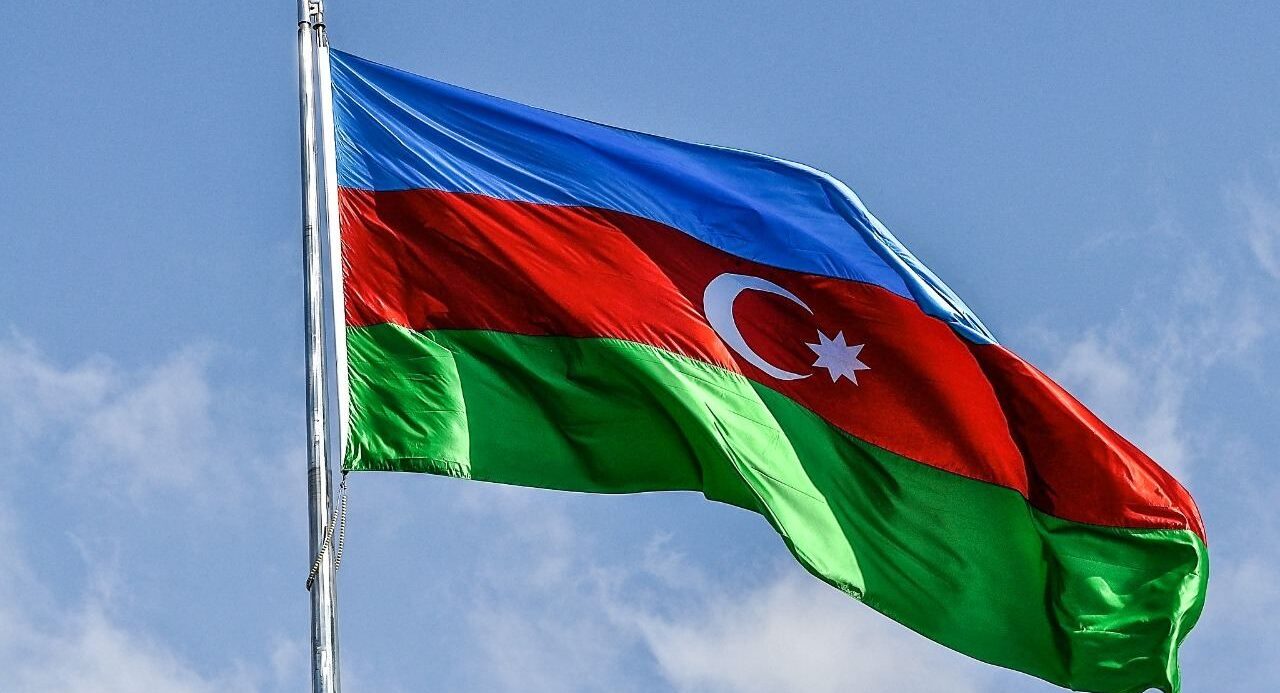
Against this background, Azerbaijan’s well-thought-out and balanced position looks all the more striking. There are no foreign military bases on the territory of our country. Moreover, regardless of any future political dividends, Azerbaijan stated from the very beginning that it would not allow its territory to be used for anti-Iranian purposes.
Getting involved in other people’s games, with very unclear prospects of gain and very real risks for ourselves, is not our tactic and not our choice.
And, as practice shows, Azerbaijan’s position has fully justified itself.
Related Posts

Previous Post
Next Post


- Aliyev says Turkic world is emerging as a major center of influence

- Baku hosts Turkic World Week honouring landmark 1926 Turkological Congress

- EU envoy holds talks in Baku ahead of high-level engagement with South Caucasus
- Europe must not lose Azerbaijan: Oleksiy Goncharenko on the risks of confrontation between Baku and the Council of Europe

- A leader forged by patience and victory