
Now Reading: Intercepting Eurasia: the route that changes the rules of the game opens
-
01
Intercepting Eurasia: the route that changes the rules of the game opens

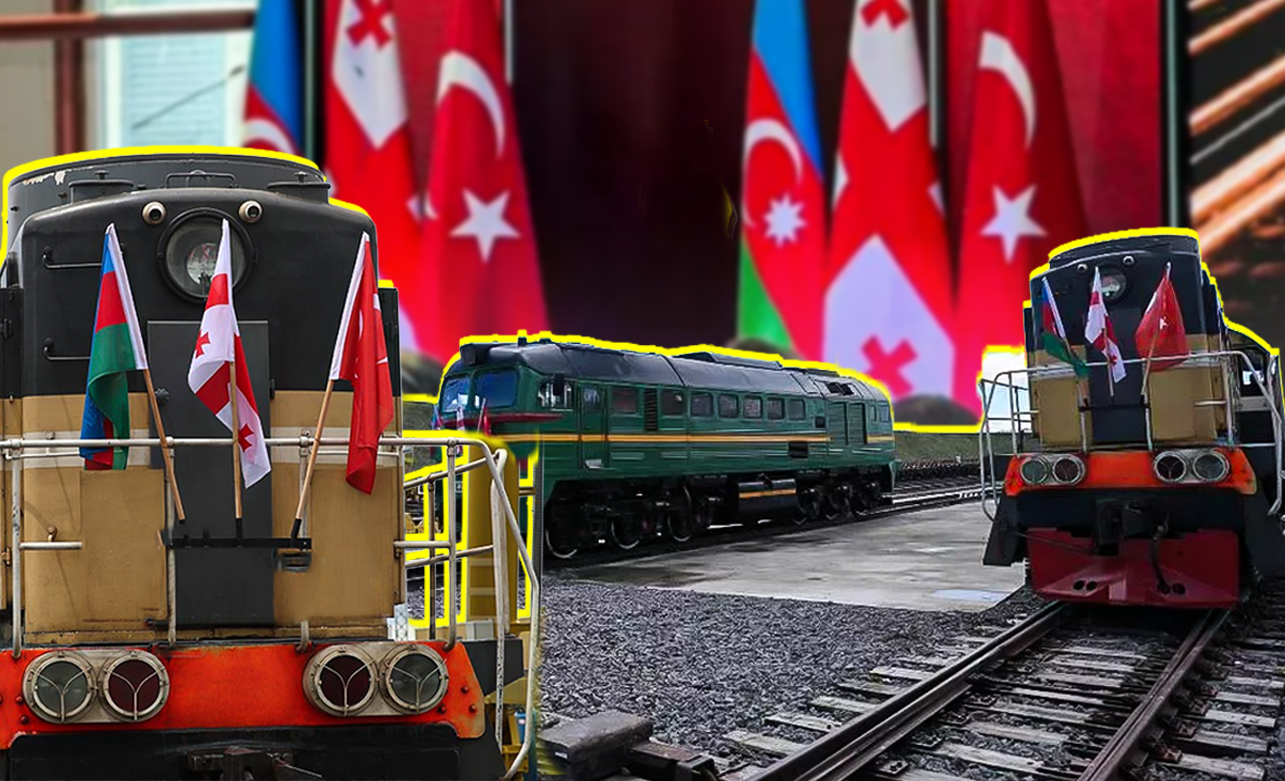
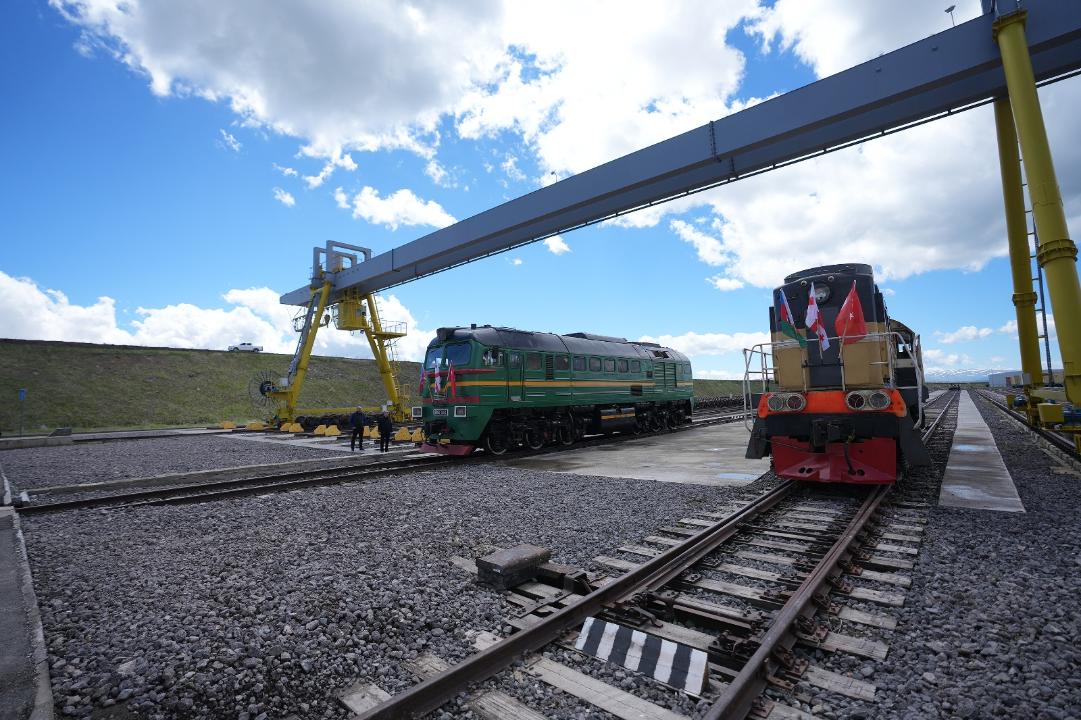
On June 2, the long-awaited ceremony marking the commissioning of the Baku–Tbilisi–Kars railway after the completion of a large-scale reconstruction of the Georgian section of the line took place in Tbilisi. Representatives of Azerbaijan, Georgia and Türkiye attended the event, underscoring the project’s strategic importance for the further development of the Middle Corridor.
Equally important is the fact that, as part of the project, the 153-kilometer Marabda–Akhalkalaki section was reconstructed and a new 27-kilometer Akhalkalaki–Kartsakhi section to the Turkish border was built. The completed modernization has increased the capacity of the Baku–Tbilisi–Kars railway from 1 million to 5 million tons of cargo per year, while stations, bridges, traction substations and signaling systems were also upgraded. In effect, this is a key element of the transport system linking Central Asia, the Caspian region, the South Caucasus and European markets.
It is noteworthy that the reconstruction was carried out with future growth in freight traffic in mind, against the backdrop of a major restructuring of Eurasian logistics. Today, this is no longer merely a railway. It is about the formation of a single transport chain that includes ports, railway lines, container shipments, logistics hubs and digital cargo-tracking systems.
The significance of this work has grown especially amid the war in Ukraine, instability around Iran and the broader geopolitical turbulence. Under these conditions, the Middle Corridor is gradually transforming from an alternative route into an independent trade artery connecting China, Central Asia, the South Caucasus, Türkiye and Europe.
At the same time, the institutional foundation of the route is also developing. Azerbaijan, Georgia and Türkiye are strengthening coordination in railway transportation, harmonizing tariffs and working to reduce cargo delivery times. To improve the efficiency of the route, BTKI Railways LLC was established. Meanwhile, within the framework of the Trans-Caspian International Transport Route, the railways of Azerbaijan, Kazakhstan and Georgia created the joint venture Middle Corridor Multimodal Ltd. Its task is to provide unified logistics solutions and make freight transportation more predictable for businesses. In 2025, China joined the project as a full participant, providing further confirmation of the Middle Corridor’s growing importance in Eurasian trade.
It is also telling that the BTK is used not only by the countries of the Middle Corridor. Since 2019, the route has also been used for the transportation of Russian cargo, and later regular shipments between Russia and Türkiye were organized along it. This shows that the railway is gradually becoming a universal Eurasian transport route, demanded by various participants in regional trade.
The modernized BTK also fits into the broader project of developing the Caspian transport corridor, which the European Union promotes under the Global Gateway initiative. For Brussels, this route is one of the key instruments for strengthening ties with Central Asia and the South Caucasus, as well as for diversifying trade routes between Europe and Asia.
The point is that after the EU–Central Asia summits in Samarkand in 2025 and the intensification of dialogue between Europe, the United States and the countries of Central Asia, the West has effectively begun to view the Middle Corridor as one of its key instruments of economic presence in the region. This is not only about trade, but also about access to raw materials, rare earth metals, uranium, critical minerals and Central Asia’s energy resources.
Under these conditions, the Baku–Tbilisi–Kars railway acquires special importance. It is precisely this line that provides cargo from the Caspian region with access to the Turkish and European railway networks. Therefore, a significant share of the freight flows expected to be attracted through the development of the Middle Corridor will inevitably pass through the BTK. In effect, the railway is becoming one of the key elements of transport infrastructure linking Central Asia with European markets.
For Azerbaijan, this development has particular significance. The country is consistently strengthening its position not only as an energy supplier, but also as one of Eurasia’s most important transport hubs. Key routes connecting Central Asia, the Caspian region, the South Caucasus, Türkiye and European markets pass through Azerbaijani territory. That is why the development of the BTK, port infrastructure, the Trans-Caspian route and related logistics projects is becoming part of a long-term strategy to turn Azerbaijan into one of the central nodes of Eurasian trade.
Ilgar Velizade
Related Posts

- Aliyev says Turkic world is emerging as a major center of influence

- Baku hosts Turkic World Week honouring landmark 1926 Turkological Congress

- EU envoy holds talks in Baku ahead of high-level engagement with South Caucasus
- Europe must not lose Azerbaijan: Oleksiy Goncharenko on the risks of confrontation between Baku and the Council of Europe
- A leader forged by patience and victory