
Now Reading: Stalin started it — Armenia continued it: the tragedy of expelled peoples
-
01
Stalin started it — Armenia continued it: the tragedy of expelled peoples

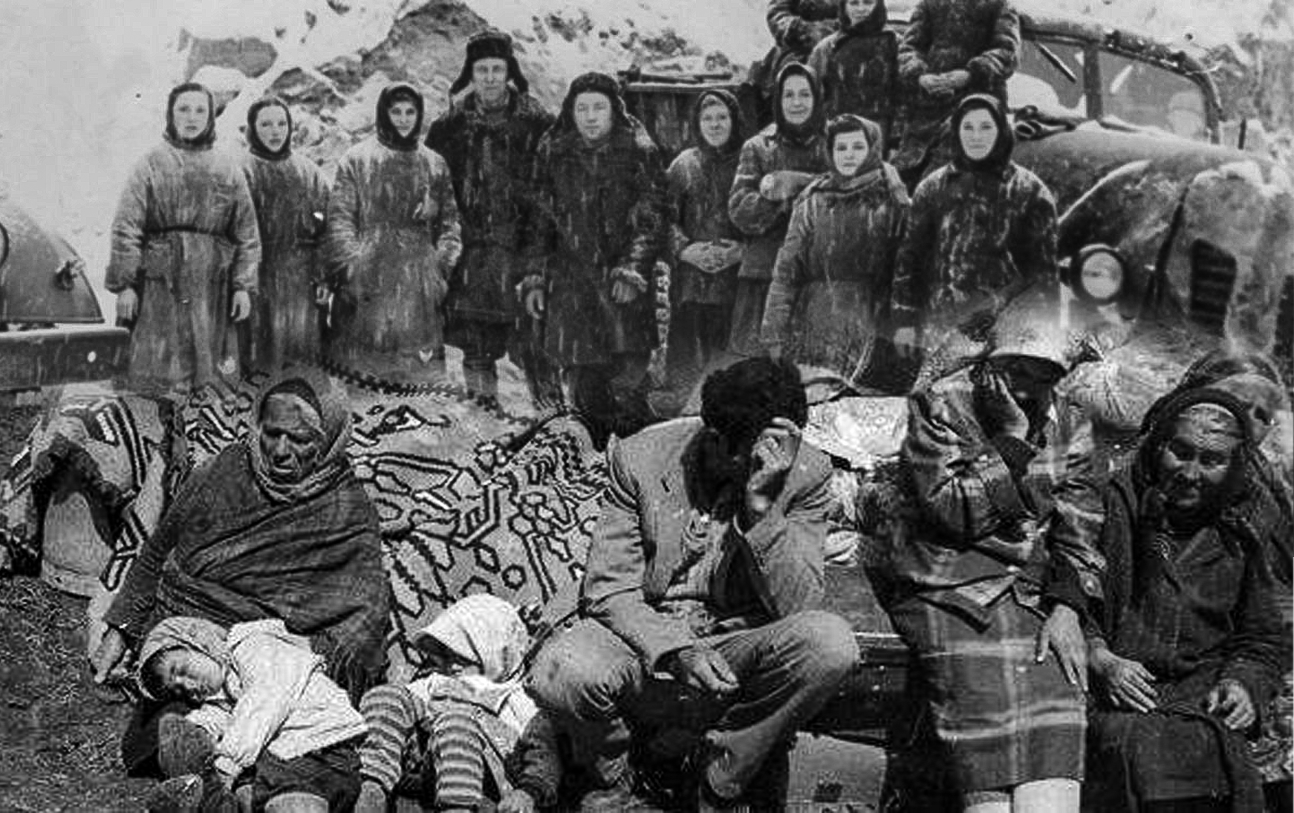
Human history is not only a story of progress and the triumph of freedom. It is also a sequence of monstrous crimes committed by totalitarian regimes that, hiding behind ideology, mercilessly destroyed entire peoples. May 18, 1944, became one of the darkest days in this chronicle of barbarism. On that day, Stalin’s death machine launched an operation to completely expel the Crimean Tatar people from their historical homeland. It was not merely an act of repression — it was an act of state terror aimed at destroying a people as such.
Early in the morning of May 18, 1944, NKVD units surrounded Tatar villages and towns. People, many of whom had only recently lost fathers and sons on the fronts of the Great Patriotic War, were given only a few minutes to gather their belongings. No law, no mercy — only an order. Within three days, almost 194,000 people were uprooted from Crimea. They were driven like cattle into freight wagons and sent to the deserts of Central Asia, to the cold of the Urals and Siberia.
Tens of thousands died on the way and during the first years of exile — from hunger, typhus, cold and despair. Children, the elderly and women suffered especially cruelly. The Soviet authorities cynically accused an entire people of “treason,” even though thousands of Crimean Tatars had fought in the Red Army and partisan units. This was classic Stalinist collective punishment: when an entire ethnic group is destroyed for the alleged guilt of individual people.
Today we call things by their proper names: it was genocide. It has been recognized as such by Ukraine, Lithuania, Latvia, Canada and other countries. But for the victims, this recognition no longer changes anything. They lost their homeland forever.
This tragedy was not unique. The Stalinist regime dealt with other peoples with the same ruthlessness. The Vainakhs, Karachays, Balkars, Nogais, Meskhetian Turks and others were also subjected to deportation.
Clearly, in these cases it was no longer possible to speak seriously of “collaboration with the Nazis.” By 1944, the end of Nazi Germany was already predetermined. The Soviet Army was confidently advancing, the Western Allies had opened the “second front” in Normandy, and the Kremlin was already thinking about war with Türkiye and the fulfillment of Russia’s “great imperial dream” — access to the Bosporus and Dardanelles straits. For that, among other things, it was necessary to “secure the rear.” In the mind of the “Father of Nations,” this meant deporting those who, in the event of war with Türkiye, might have had their own opinion: the Crimean Tatars, the Meskhetians, the Turkic peoples of the North Caucasus. Azerbaijanis living on the territory of Armenia were also included in this list. Their tragic fate is especially close in spirit to that of the deported Crimean Tatars.
On December 23, 1947, Stalin personally signed a decree on the deportation of Azerbaijanis from the Armenian SSR. Officially, it was called the “voluntary resettlement” of 100,000 people. In reality, it was forced expulsion. Azerbaijanis were thrown out of their homes, stripped of their property and sent to the malarial swamps of the Kura-Aras lowland. According to Azerbaijani archival data, tens of thousands of families suffered between 1948 and 1953. Many did not survive the journey to their new place of settlement.
But this was only the beginning.
In 1988–1991, against the backdrop of the collapse of the USSR, a second and even more brutal wave of ethnic cleansing took place. More than 250,000 Azerbaijanis were expelled from their native homes under threat of death. Pogroms, killings, rapes and arson were used systematically. According to official Azerbaijani data, 216 people were killed, including women and children. By 1991, Armenia had almost completely cleansed itself of Azerbaijanis. The last Azerbaijani village, Nuvadi, fell in August 1991.
Mikhail Gorbachev, the architect of perestroika, denounced Stalin from every platform, yet he continued his policy. The Crimean Tatars never received the right to return. Meanwhile, Azerbaijanis were being systematically expelled from Armenia, and Soviet security structures did nothing to prevent it. There was no “state of emergency,” no security measures — nothing. Only the terrible tragedy of hundreds of thousands of people whose only guilt was their ethnicity.
Common Features — A Terrifying Similarity
And here it is necessary to give a political assessment. Both peoples experienced the same logic of totalitarian evil: collective guilt without trial or investigation. In both cases, the USSR pursued the same inhuman policy — the deliberate destruction of an ethnic presence on historical lands. In both cases, the state was cynically used as an instrument of ethnic cleansing. The result was thousands of deaths, broken destinies and a trauma of lost homeland passed down through generations.
The only difference was the timeframe: the Crimean Tatars were broken in three days, while the Azerbaijanis were pushed out over decades. But the essence was the same — a state crime against human dignity.
That is precisely why it is still too early to treat those events as mere history. In a world where totalitarian and authoritarian regimes are once again raising their heads, the memory of such tragedies acquires special urgency. We cannot afford the comfort of oblivion. The deportation of the Crimean Tatars and the expulsion of Azerbaijanis are not “historical episodes,” but warnings: when a state begins to divide people by ethnicity and punish entire peoples, it ceases to be civilized. It becomes a machine of repression.
Only honest recognition of these crimes, firm condemnation and resolute protection of peoples’ rights to their land and their identity can prevent such horrors from being repeated. Memory is not weakness. Memory is a weapon against future barbarism.
Related Posts
Previous Post
Next Post

- Aliyev says Turkic world is emerging as a major center of influence

- Baku hosts Turkic World Week honouring landmark 1926 Turkological Congress

- EU envoy holds talks in Baku ahead of high-level engagement with South Caucasus

- Europe must not lose Azerbaijan: Oleksiy Goncharenko on the risks of confrontation between Baku and the Council of Europe

- A leader forged by patience and victory