
Now Reading: Yerevan’s prospects in the EAEU: The real reckoning comes in December
-
01
Yerevan’s prospects in the EAEU: The real reckoning comes in December

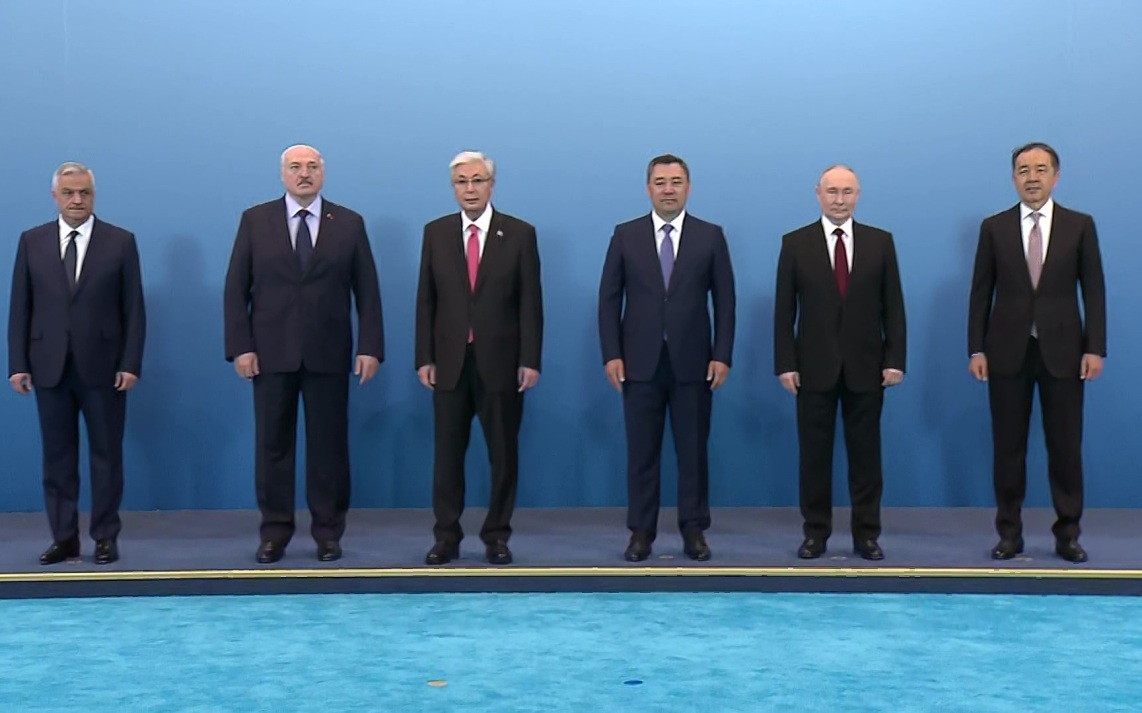
Following the EAEU summit held in Astana on May 29, a joint statement was issued by the presidents of Russia, Vladimir Putin; Belarus, Alexander Lukashenko; Kazakhstan, Kassym-Jomart Tokayev; and Kyrgyzstan, Sadyr Japarov, regarding the situation surrounding Armenia’s aspiration to integrate with the European Union.
As is known, Nikol Pashinyan did not attend the summit, citing his involvement in the election campaign, and was represented instead by Armenia’s Deputy Prime Minister Mher Grigoryan. However, the participants in the event apparently regarded the “valid” reason for the Armenian leader’s absence as yet another sign of official Yerevan’s skeptical attitude toward the prospects of remaining in the Eurasian Union.
This ambiguity has long troubled the leaders of the EAEU, above all Russia, which is convinced that the current Armenian authorities have long since decided where Armenia should integrate and are now merely playing for time, hoping to wait for a convenient moment to make a final break with their current partners in the union. The fact is that in recent years — and even more so in recent months — Armenian leaders have repeatedly made it clear that their strategic goal is to move toward European integration.
In early May, Armenian Prime Minister Nikol Pashinyan stated openly that Armenia would like to join the European Union.
“This is our intermediate main goal, because we understand that no country can become a full member of the EU without meeting these standards. If we are accepted as a full member of the EU, we will be glad and happy. If we are not accepted, in any case we will be in a winning position, because the Republic of Armenia will be a country with European standards,” the prime minister said at the time.
Moscow, however, apparently does not intend to wait for Yerevan’s final decision. One may assume that the Russian leader persuaded his partners to issue a public appeal to the Armenian leadership — or rather, to the Armenian people — to determine Armenia’s participation in the EAEU. It is no coincidence that in their statement, the leaders of the four countries spoke of the need to hold a nationwide referendum in Armenia on joining the EU or continuing to remain part of the Eurasian Economic Union.
The statement also says that Yerevan’s very preparations for integration with the European Union create significant risks for the economic security of EAEU member states and may cause damage to the countries of the union.
This is, in general, understandable. If Armenia begins to move deeply closer to the EU — changing standards, certification rules, customs administration, digital control systems and border procedures — it will gradually move out of the EAEU’s common regulatory policy. It is reasonable to assume that the union will hardly wait passively while such processes unfold before its eyes.
As for Armenia itself and its position within the EAEU, one need only look at the figures. They clearly show that for Armenia, the EAEU today has far greater immediate economic importance than the European Union. Armenia’s trade volume with the states of the Eurasian space is roughly six times higher than its trade with the EU.
Russia plays the key role, accounting for more than half of Armenia’s total foreign trade. The Russian market remains the main destination for Armenian exports, including food products, agricultural goods, beverages and processed industrial products. Armenia receives around 80% of the natural gas it consumes from Russia.
In addition, thanks to EAEU membership, Armenian citizens have free access to the labor markets of the union’s member states, first and foremost Russia. Remittances from Armenian labor migrants in Russia have amounted to billions of dollars in recent years and remain one of the country’s important sources of foreign currency inflows. According to some estimates, in 2025 alone, the volume of transfers from Russia approached $4 billion — around 13% of GDP.
This is why, despite the intensification of political dialogue between Yerevan and Brussels, in purely economic terms the EAEU’s significance for Armenia remains substantially greater today than that of the European Union.
Yerevan, however, appears to prefer not to emphasize this. Its partners in the Eurasian Union, by contrast, seem to see things differently. This is probably why, at the Astana summit, the leaders agreed that representatives of Belarus, Kazakhstan, Kyrgyzstan and Russia would present a report at the meeting of the Supreme Eurasian Economic Council in December 2026 on the possible consequences of suspending the EAEU treaty with respect to Armenia.
In effect, by December the EAEU countries intend to prepare for Yerevan a detailed list of the consequences Armenia may face if it continues to diverge from the union’s integration obligations. This may concern both trade and customs issues, as well as the country’s future participation in the EAEU’s common economic space.
As is known, a significant part of Armenian business is closely tied to the markets of EAEU countries, while hundreds of thousands of Armenian citizens work, conduct business or maintain economic links within the union’s space. In this context, the EAEU statement may have not only foreign-policy and economic significance, but also domestic political significance. Ahead of the parliamentary elections to be held on June 7, it effectively reminds Armenian society of the possible economic costs of further distancing from Eurasian integration and may become an additional factor in the debate over the country’s foreign-policy course.
In Armenia itself, officials were quick to reassure partners that no change of course was taking place.
“Armenia confirms its commitment to mutually beneficial cooperation within the framework of the EAEU,” Deputy Prime Minister Mher Grigoryan said, stressing that the republic intends to continue participating in the work of the union in good faith.
However, in Moscow and in some other EAEU capitals, there has recently been less and less inclination to believe statements coming from Yerevan. They appear to prefer being guided by the old principle: chickens are counted in the autumn. Or, in this case, in December, when the report on the consequences of the possible suspension of the EAEU treaty with respect to Armenia is to be presented. Especially since, by historical standards, that “autumn” is not so far away — and real steps often speak far louder than even the most proper statements.
Ilgar Velizade
Related Posts
Previous Post
Next Post

- Aliyev says Turkic world is emerging as a major center of influence

- Baku hosts Turkic World Week honouring landmark 1926 Turkological Congress

- EU envoy holds talks in Baku ahead of high-level engagement with South Caucasus

- Europe must not lose Azerbaijan: Oleksiy Goncharenko on the risks of confrontation between Baku and the Council of Europe
- A leader forged by patience and victory