
Now Reading: Who is frightening Armenia with scare stories about Azerbaijan: an old scenario at work
-
01
Who is frightening Armenia with scare stories about Azerbaijan: an old scenario at work
Who is frightening Armenia with scare stories about Azerbaijan: an old scenario at work

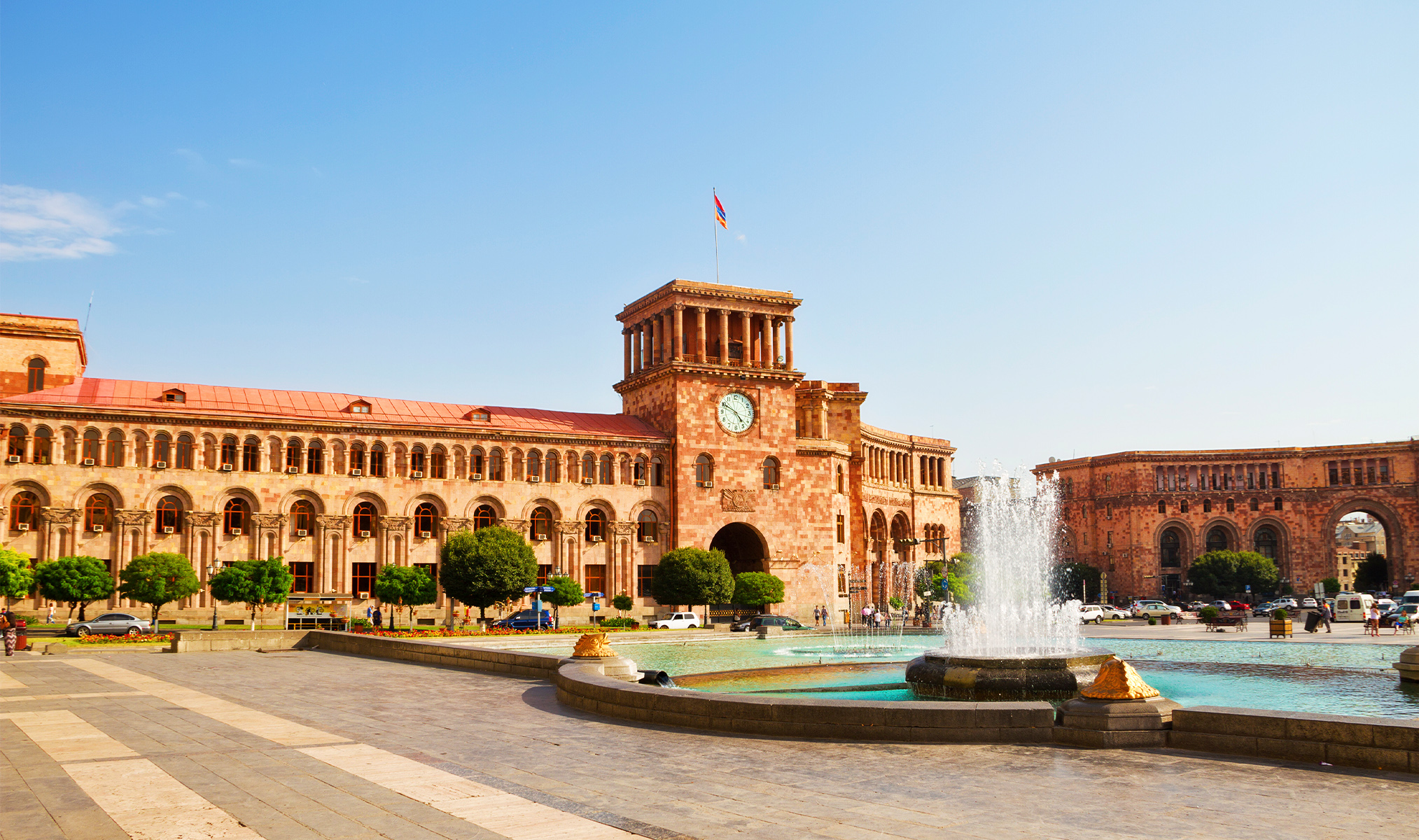
Against the backdrop of approaching parliamentary elections in Armenia, statements are increasingly appearing in the Russian information space in which Azerbaijan is once again portrayed as a potential threat to Armenian statehood and public stability. Moreover, this rhetoric is accompanied by claims about a “Western conspiracy,” “risks of civil war” and other scare stories, rapidly injected into the media space.
Another example of such a political provocation was the statement by Russian military expert Alexander Mikhailov, who linked Yerevan’s course of distancing itself from Moscow with an allegedly possible scenario of internal destabilization. According to his purely subjective version, the main beneficiary of such a development would be Azerbaijan.
Moreover, claims were made about the possible “transfer of Armenia’s southern territories under the control of Azerbaijan and pro-Western forces,” as if these were identical concepts.
Let us put it this way: such statements are difficult to view outside the broader political context. Simply put, in recent months, part of Russian political and expert circles has been increasingly shaping the perception in Armenian society that weakening ties with Moscow will automatically lead to a growing threat from Baku.
In effect, Azerbaijan is once again being used as a tool of political pressure and an element of domestic political mobilization within Armenia itself. It should be noted that this rhetoric noticeably diverges from the real processes taking place in the region. After Azerbaijan restored its sovereignty in Karabakh, official Baku repeatedly declared its interest in a full-fledged peace agreement with Armenia, the opening of communications and the formation of a stable security architecture in the South Caucasus. It is on this basis that the negotiation process is being built today.
Yet it seems that some comrades — who, as it turns out, are not comrades to us at all — cannot live in peace and do not like the prospect of peace. Instead of supporting the parties striving for peace, as is regularly voiced in official Russian statements, some external actors and information platforms linked to them continue to recycle old fears and inject confrontational scenarios into public discourse. What is also striking is that this is being done through a well-known scheme: the familiar idea for Armenian society of a “threat of losing statehood” and the constant juxtaposition of Armenia against Azerbaijan.
In this context, particular attention is drawn to the persistent use by a number of Russian media outlets of the term “Nagorno-Karabakh,” despite the fact that this conflict has officially ended and the region itself is an integral part of Azerbaijan, recognized by the international community, including official Moscow. In this regard, the reaction of Azerbaijan’s foreign ministry to the use of this inadmissible terminology, contrary to international law, on the air of one Russian television channel was telling: the ministry’s statement stressed that the display of a map mentioning “Nagorno-Karabakh” caused surprise and regret.
Azerbaijan’s Foreign Ministry recalled that “there is no administrative-territorial unit called ‘Nagorno-Karabakh’ on the territory of Azerbaijan,” and that such actions contradict the country’s territorial integrity and do not correspond to Russia’s own official position, which recognizes Karabakh as part of Azerbaijan.
The Azerbaijani side also noted that the use of such designations “harms the process of normalizing relations between Azerbaijan and Armenia.”
This emphasis is particularly important because Baku is, in effect, pointing to the main risk of such information policy — attempts to preserve an atmosphere of mistrust and mutual fears even after the end of the conflict.
It is noteworthy that the claim about an allegedly existing threat of “Azerbaijan absorbing Armenia” is being actively promoted precisely during the run-up to Armenia’s elections. In this way, an information construct is being created in which any course by Yerevan toward reducing dependence on Russia is automatically linked to the risk of losing security. Thus, certain forces in Russia are trying to shape the desired background among Armenian citizens by manipulating public consciousness.
However, such logic no longer corresponds well to the real situation in the South Caucasus, because today the region’s key demand is not the preservation of confrontation, but the formation of a stable system of peaceful coexistence, economic interaction and transport connectivity.
Against this backdrop, attempts to once again play the “Nagorno-Karabakh” card, as well as to portray Azerbaijan as a permanent threat, look like an effort to preserve old mechanisms of influence through fear and geopolitical dependence.
As for the position of official Baku, it consistently demonstrates a different line — one aimed at advancing efforts to achieve a peace treaty, mutual recognition of territorial integrity and rejection of revanchist rhetoric. Only such an approach objectively serves the interests of long-term stability in the South Caucasus today.
Tamerlan İbrahimov
Related Posts

Previous Post
Next Post

- Aliyev says Turkic world is emerging as a major center of influence

- Baku hosts Turkic World Week honouring landmark 1926 Turkological Congress

- EU envoy holds talks in Baku ahead of high-level engagement with South Caucasus

- Europe must not lose Azerbaijan: Oleksiy Goncharenko on the risks of confrontation between Baku and the Council of Europe

- A leader forged by patience and victory