Now Reading: OTS emerges as a new geopolitical force in Eurasia
-
01
OTS emerges as a new geopolitical force in Eurasia

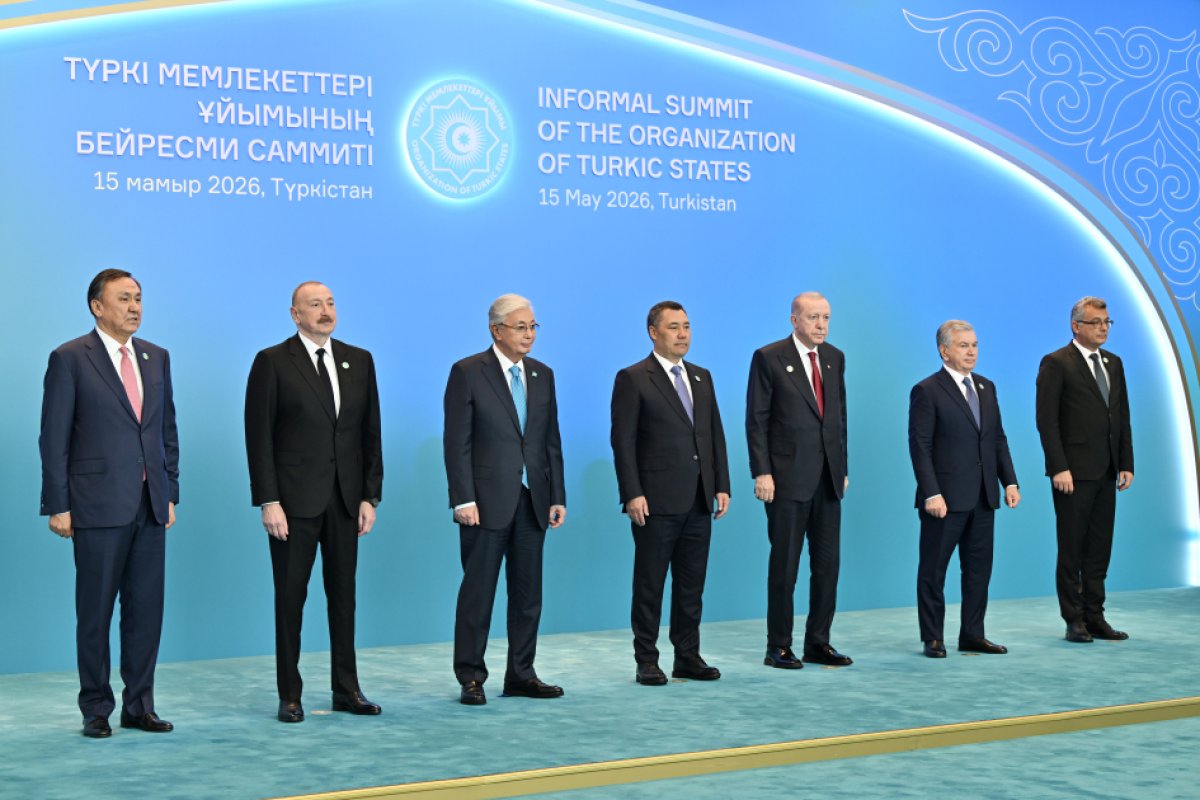
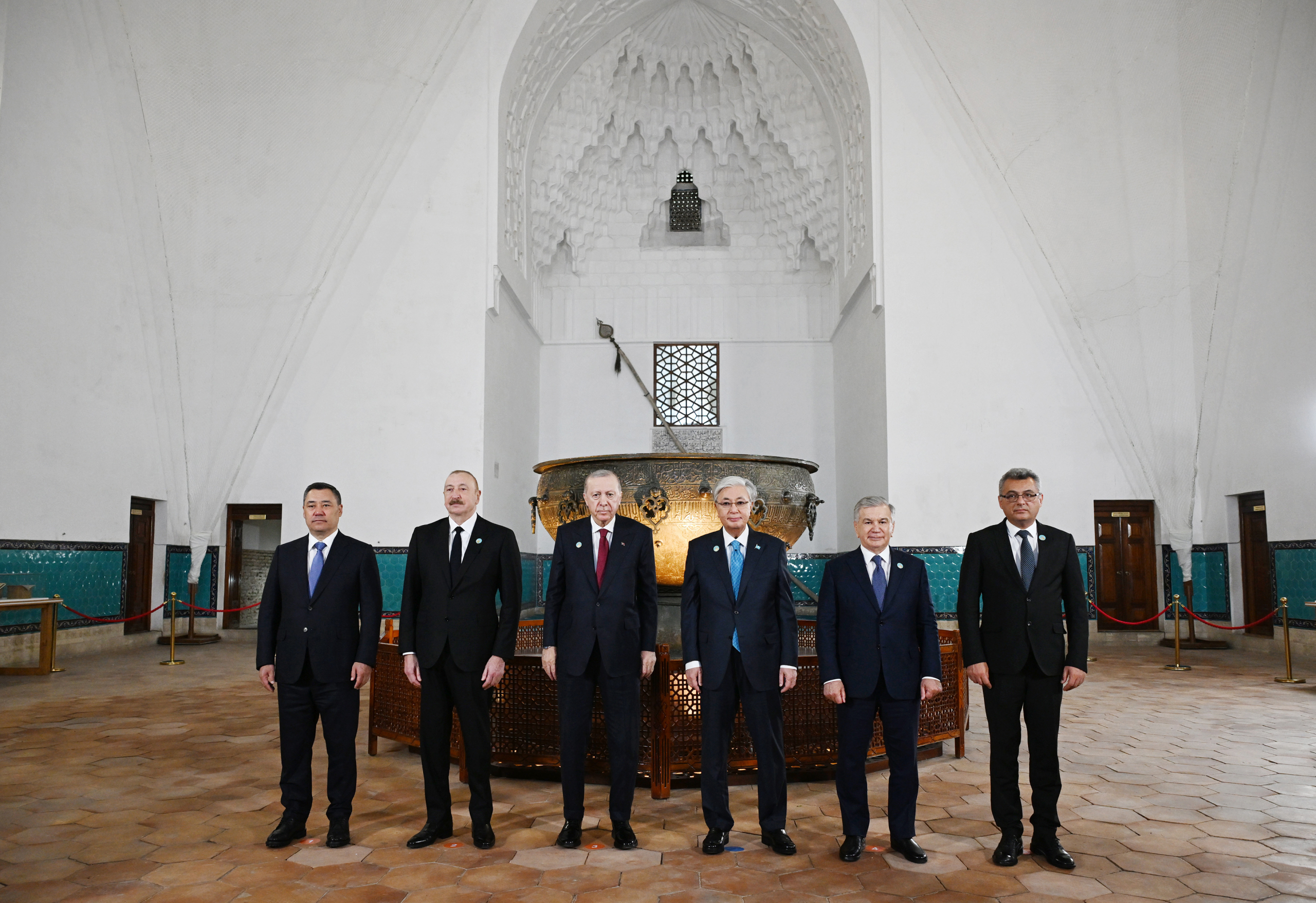
Today, May 15, an informal summit of the heads of state of the Organization of Turkic States is taking place in the ancient city of Turkestan, Kazakhstan. The leaders of the OTS member states — Kazakhstan, Azerbaijan, Türkiye, Kyrgyzstan and Uzbekistan — as well as representatives of observer states, have gathered to discuss mainly non-political issues.
The agenda of the event sounds technocratic: “Artificial Intelligence and Digital Development.” However, although the OTS summit formally lies outside the sphere of day-to-day politics, it is expected that this time as well it will find itself at the center of regional processes, since in recent years the organization has transformed from an ethno-cultural union into a significant geopolitical alliance.
The organization was officially founded on October 3, 2009. At that time, it was called the Cooperation Council of Turkic-Speaking States, or the Turkic Council. The idea was similar to the concept behind many associations created with the participation of post-Soviet countries: to strengthen friendship, develop cultural ties, and support languages and traditions. In other words, at the time of its creation, the organization stood entirely outside the geopolitical agenda.
But in 2021, at the summit in Istanbul, the association was renamed the Organization of Turkic States. This was not merely a change of name: it marked the emergence of an international structure with political ambitions. In 2025, the combined GDP of its member and observer states exceeded $2.1 trillion, while their total population approached 180 million people. The process of strengthening the OTS’s geopolitical significance accelerated especially after Russia’s large-scale military intervention against Ukraine. That war changed trade routes and energy supply chains in the region. Sanctions against Moscow pushed Central Asian countries to search for new logistical opportunities. Global supply chains never fully recovered after the pandemic, while trade wars between the United States and China have only deepened overall instability. It was under these conditions that the OTS, now with a new substance, received an unexpected strategic window of opportunity.
The organization is actively promoting the Middle Corridor — a transport and trade route connecting China with Europe through the Caspian Sea and the Caucasus, bypassing Russia. China benefits from it directly, while the EU and the United States show practical interest because it fits into their strategy of diversifying Eurasian routes. The strategic importance of this route is expected to grow even further after the implementation of the “Trump Route” project, which is being formed as one of the branches of the Middle Corridor and conceived as an integral part of the Zangezur Corridor, ensuring direct transport links between Türkiye and the Turkic republics of Central Asia through Azerbaijan. Trade and logistical links among Turkic-speaking states will also expand. This will accelerate the transformation of the Organization of Turkic States into an important regional geopolitical alliance.
For the Central Asian members of the OTS, the Middle Corridor is not merely a logistical route, but a tool for reducing dependence on transit infrastructure built back in the Soviet era. At the 2024 summit in Bishkek, strengthening transport and logistics links, primarily the Trans-Caspian Corridor, was named as the OTS’s main task.
Undoubtedly, if the development of transport and logistics infrastructure were accompanied by the construction of oil and gas pipelines along the seabed of the Caspian Sea, the geopolitical significance of the union of Turkic-speaking countries would increase even further. This idea has existed since the early 2000s. However, problems related to defining the legal status of the Caspian Sea, as well as the Russian and Iranian factors, long delayed plans to build Trans-Caspian oil and gas pipelines. In recent years, against the backdrop of the changing geopolitical situation in the world and in the region, these plans have once again become relevant.
Many Western experts believe that, with strong political support from the United States and the European Union, the Trans-Caspian Gas Pipeline project could be implemented to transport tens of billions of cubic meters of Turkmen gas to European markets through Azerbaijan. Kazakhstan is also looking for ways to further diversify its oil exports, and the construction of a Trans-Caspian oil and gas pipeline is of critical importance for Astana. However, skepticism toward these plans remains: it is believed that the current geopolitical situation does not favor the implementation of large-scale infrastructure projects such as the Trans-Caspian oil and gas pipeline, as the region is under pressure from both the north and the south.
It should also be noted that Moscow views with caution the formation of a parallel architecture of integration based not on a post-Soviet identity, like the CIS, but on Turkic ethno-cultural commonality. After the OTS summit held in Azerbaijan’s Gabala in October last year, Alexander Ananyev, a former senior adviser at the Russian Foreign Ministry, wrote in his article about the growing role and importance of this organization, as well as Azerbaijan’s role within it: “It is impossible not to notice that in the past few years Azerbaijan’s penetration into Central Asia has intensified and acquired a new quality. In addition to geographical proximity, Azerbaijan is linked to Central Asia by economic interests. It also pursues political goals. After its victory in the Second Karabakh War, Baku began to claim a leading role not only in the South Caucasus, but also in Central Asia and even in the Middle East. At the extraordinary OTS summit in 2023, Mr. Ilham Aliyev stated that ‘the Turkic world is not limited to the borders of Turkic states,’ but covers ‘a much broader geography.’ In essence, Baku is attempting to move to a higher geopolitical level. Azerbaijan intends to use its chairmanship of the OTS to create a multi-structured system of cooperation with Central Asia, covering humanitarian, political, as well as military and energy spheres.”
The former diplomat also referred to a narrative widespread in the Russian expert community, namely that the activities of the OTS serve the interests of the United States and Brussels and, therefore, run counter to Russia’s interests: “The expansion and intensification of the OTS’s activities are leading to geo-economic and geopolitical shifts, with the West acting as almost the main driving force behind them.”
It should be recalled that at the October 2025 OTS summit in Gabala, held under the theme “Regional Peace and Security,” Azerbaijani President Ilham Aliyev put forward an initiative that caused perhaps the greatest resonance in the organization’s history: he proposed holding joint military exercises of the OTS member states in Azerbaijan in 2026. The logic was clear — cooperation in the defense sphere is already developing: Azerbaijan has held bilateral exercises with Kazakhstan, Uzbekistan and Türkiye. Why not formalize this practice under the organization’s flag?
Joint military exercises under the auspices of the OTS, involving all five member states, had still not taken place by the time of the Turkestan summit. Apparently, this is due to the fact that Kazakhstan, Uzbekistan and Kyrgyzstan still treat the idea of holding exercises under a single Turkic flag with caution. It is no secret that Moscow does not view the prospects of military integration among Turkic states particularly positively.
Kazakhstan, Kyrgyzstan and Uzbekistan are simultaneously members of the OTS, the CIS, the SCO and the CSTO. So far, they have managed to maneuver between Ankara, Moscow and Beijing, but with each passing year the room for maneuver is narrowing. The story of the military exercises that did not take place is a good illustration of this process.
Nevertheless, interest in the OTS from third countries is growing. In 2025, Japan held talks on cooperation. Gulf states are also taking a closer look at the organization. This is no coincidence — it is an indicator that the world already perceives the OTS as an independent actor, and not merely as a cultural association.
Related Posts
Previous Post
Next Post
- Aliyev says Turkic world is emerging as a major center of influence
- Baku hosts Turkic World Week honouring landmark 1926 Turkological Congress

- EU envoy holds talks in Baku ahead of high-level engagement with South Caucasus
- Europe must not lose Azerbaijan: Oleksiy Goncharenko on the risks of confrontation between Baku and the Council of Europe

- A leader forged by patience and victory